Updated on
Summary Law amendment follows summons of intelligence chief.
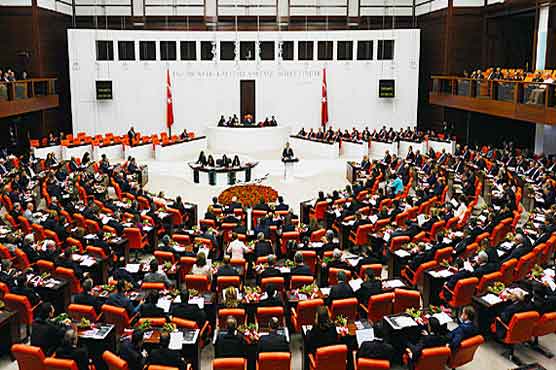
Turkeys parliament voted late on Thursday to prevent prosecutors questioning intelligence officials without the prime ministers permission, after a row which analysts said revealed a government split on how to end the war with Kurdish militants.The governing AK Party hastily introduced the amendment after prosecutors summoned National Intelligence Agency (MIT) chief Hakan Fidan for questioning on secret talks he held with the militant Kurdistan Workers Party (PKK).Fidan was working in Prime Minister Tayyip Erdogans office at the time of the talks before the premier promoted him to head MIT. He ignored the summons and the prosecutor who issued it was removed from the case and then put under investigation himself.Fidan and MIT have repeatedly clashed with police over the detention and exposure of undercover operatives during the arrests of hundreds of suspected PKK sympathisers, media said.Some analysts have interpreted the move against Fidan as a challenge by followers of a rival religious wing within Erdogans party which emerged from a series of banned Islamist groups to scupper the prime ministers secret efforts to negotiate an end to the 27-year-old conflict with the PKK.Umit Boyner, chairwoman of the influential TUSIAD business association, spoke of her horror at what she called the power struggle within the state.The AKP denied any split and there was little evidence of it when government deputies swung behind the prime minister and voted to back the amendment to the law on intelligence agencies.Opposition parties said the motion was a further grab for more power by Erdogan.Its clearly contrary to the rule of law. Its not right to give one person this authority. This can only happen in a dictatorship, social democrat opposition leader Kemal Kilicdaroglu told the NTV news channel.He said his Republican Peoples Party planned to appeal to the constitutional court.Turkeys courts have become swamped in the last year with dozens of often inter-linked cases against hundreds of suspected PKK supporters, military officers, journalists and others.The secularist opposition says the judiciary has been filled with officials sympathetic to the government since Erdogans AK Party came to power in 2002. It won its third election last year with a large majority, giving Erdogan a comfortable mandate.In tapes of the talks with the PKK, held in Oslo and leaked to the media last year, Fidan, then the prime ministers special envoy, said Erdogan was prepared to take a great political risk to pursue peace talks with the PKK, which Turkey, the United States and the European Union all class as a terrorist organisation.Fighting has since flared up in the mainly Kurdish southeast where Turkish troops are determined to show no signs of letting up in their campaign against the PKK during the winter months when the mountainous region is blanketed under heavy snow.Kurdish analysts say there are elements within the Turkish armed forces, the second biggest in NATO, and the police which have a vested interest in the continuation of the war which has cost the lives of 40,000 rebels, soldiers and civilians