Summary The timing of the potential indictment, which would need to be approved by a grand jury, was not immediately clear, but the official said it sounds imminent
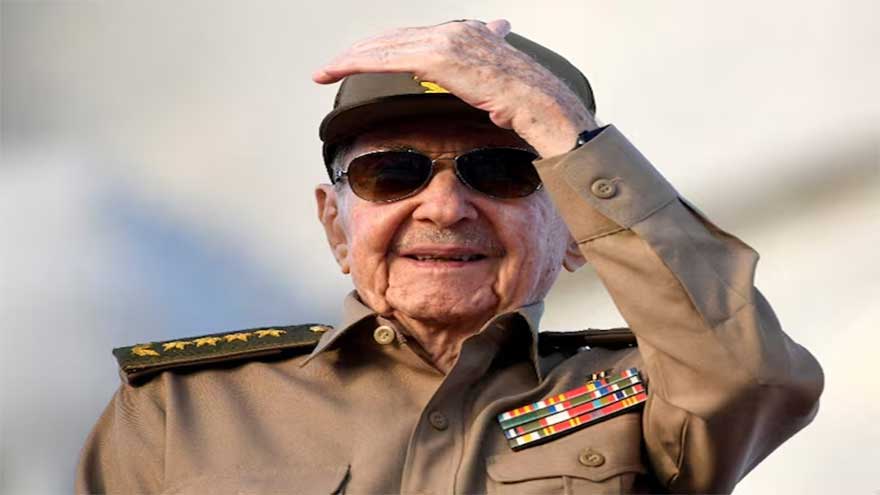
(Reuters) – The United States plans to indict Cuba's Raul Castro, a US Department of Justice official said late on Thursday.
The timing of the potential indictment, which would need to be approved by a grand jury, was not immediately clear, but the official said it sounds imminent.
The potential indictment of the 94-year-old former president of Cuba and brother of Fidel is expected to focus on the downing of aircraft, the official said on condition of anonymity.
CBS previously reported that the case relates to Cuba's deadly1996 shootdown of planes operated by humanitarian group Brothers to the Rescue.
Representatives for Cuba's foreign ministry did not immediately respond to a request for comment outside of normal business hours.
A US Justice Department spokesman did not immediately respond to a request for comment.
Trump's administration has called Cuba's current communist-run government corrupt and incompetent and is seeking to replace it. The latest move comes as President Donald Trump has heaped pressure on Cuba, effectively imposing a blockade on the island by threatening sanctions on countries supplying it with fuel, igniting power outages and delivering blows to its economy.
The US Attorney's Office for the Southern District of Florida hasbeen overseeing an effort to examine potential criminal charges against senior Cuban government officials.
Officials from both countries acknowledged earlier this year that they were in talks, but the negotiations appeared to founder amid the ongoing US fuel blockade.
However, on Thursday, the Cuban government confirmed it had met with CIA chief John Ratcliffe.
Ratcliffe told intelligence officials in Cuba that the US was prepared to engage on economic security issues if Cuba makes "fundamental changes," a CIA official said.

A man drives an electric rickshaw along an avenue as Cuba's electrical grid suffered a partial collapse early Thursday morning, cutting power across eastern Cuba amid a US fuel blockade, in Havana, Cuba, May 14, 2026.
ELECTRICAL GRID SUFFERS PARTIAL COLLAPSE AS PROTESTS FLARE
Cuba's electrical grid suffered a partial collapse early on Thursday morning, the country's grid operator UNE said, snuffing out power across eastern Cuba and testing the patience of Cubans already exhausted from seemingly interminable blackouts amid a US fuel blockade.
By mid-morning officials had restored power to some essential services in the region, the grid operator said, though much of Cuba east of Camaguey, including the island's second-largest city, Santiago de Cuba, remained largely without electricity.
The Caribbean island of nearly 10 million people has reached a tipping point this month, as summer heat sets in and the vast majority – including in the capital Havana – now suffer without electricity for 20 hours or more each day.
The blackouts dramatically worsened in January after US President Donald Trump threatened tariffs on any nation supplying the island with fuel. Venezuela and Mexico, once the country's top suppliers of crude oil, have since cut off shipments.
Trump has predicted Cuba would "collapse" and has said he wants to oust the current communist-run government.
Cuba's energy and mines minister said on Wednesday that the island had completely run out of fuel oil and diesel, both critical to powering the island's electrical grid, and blamed blackouts on the US blockade.
Widespread protests broke out across Havana on Wednesday evening as the power cuts in some parts of the city spanned 24 hours or more, threatening to spoil frozen food reserves and making sleep all but impossible for many residents.
"The country has no fuel and that's no lie," said Rodolfo Aragon, a 55-year-old small business owner who said he saw little hope for the future amid Cuba's conflict with the United States. "Our economy has hit rock bottom."
The United Nations last week called Trump's fuel blockade unlawful, saying it had obstructed the "Cuban people’s right to development while undermining their rights to food, education, health, and water and sanitation."