Updated on
Summary Kasab claims in a petition that he was brainwashed into committing the heinous crime.
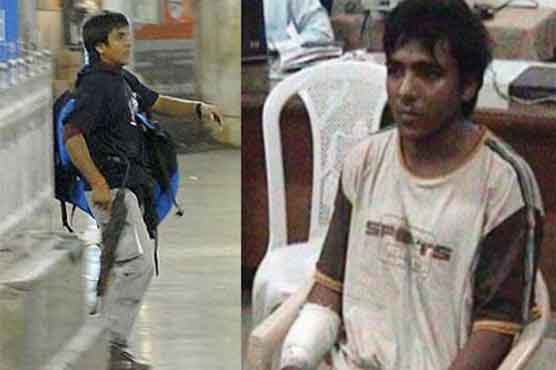
The sole convict in the 26/11 Mumbai terror attack case, Mohammad Ajmal Amir Kasab, today contended before the Supreme Court that he was not given a free and fair trial in the case.Senior advocate Raju Ramachandran, who has been appointed as amicus curiae by the apex court to defend Kasab, told a bench headed by Justice Aftab Alam that he was not a part of the larger conspiracy for waging war against nation.Even if I am guilty under section 302 (punishment for murder) of the IPC and other provisions, it cannot be said that I was a part of the larger conspiracy of waging war, said Ramachandran.Maintaining that the prosecution has failed to prove the case against him beyond doubts, he told the bench that his right against self-incrimination as well as his right to get himself adequately represented by a counsel to defend himself in the case have been violated during the trial.The apex court had on October 10, last year stayed the death sentence of 24-year-old Kasab, the lone surviving gunman involved in the 2008 Mumbai attack.In the special petition filed by Kasab, challenging the Bombay High Court judgement, he claimed he was brainwashed like a robot into committing the heinous crime in the name of God and that he does not deserve capital punishment owing to his young age.Kasab has been lodged in Arthur Road prison in Mumbai and had moved the SLP through jail authorities. He had challenged his conviction and death sentence in the terror attack case.Kasab along with nine other terrorists had landed at Budhwar Park in south Mumbai on November 26, 2008 nightby sea and had gone on a shooting spree at various city landmarks, leaving 166 people dead and many more wounded.While Kasab was captured, the other terrorists in the group were killed during the attack. He was sentenced to death by a special anti-terror court on May 6 last year.The Bombay high court had in its February 21, 2011, verdict upheld the trial court order of death sentence to Kasab for the brutal and diabolical attacks aimed at destabilising the government.Kasabs death penalty was upheld on charges of criminal conspiracy, waging war against the nation and various other provisions of the Indian Penal Code and the anti-terror law -- Unlawful Activities (Prevention) Act.The high court had upheld Kasabs conviction on 19 counts under the IPC, Arms Act, Explosives Act, Explosive Substances Act, the Foreigners Act, the Passport Act and the Railway Act.