Updated on
Summary A national strike fueled by widespread dissent over spiraling gas prices paralyzed Nigeria.
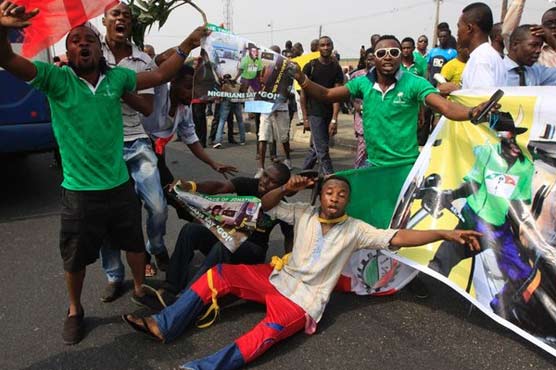
Tens of thousands of protesters took over the empty streets to criticize government corruption in one voice.Protests remained largely peaceful across the country on Monday, the strikes first day, though a police shooting in Lagos left one dead and four wounded, while another in the northern city of Kano killed two more.Still, the widespread anger could be felt just like the heat pouring off burning tires and debris left scattered by some protesters, upset by the ingrained graft and failures of Nigerias young democracy.It is high time to take Nigeria into our hands, said Bola Adejobi, 53, who works as an educational consultant and an interior designer said. It happened in Egypt. It happened in Libya.Labor unions called the strike after President Goodluck Jonathans administration announced Jan. 1 it unilaterally removed subsidies that kept gasoline prices low in the nation of 160 million people. The decision saw gas prices rise from $1.70 per gallon (45 cents per liter) to at least $3.50 per gallon (94 cents per liter). That spurred a spike in prices for food and transportation across a country where most live on less than $2 a dayCheap gasoline remains the only noticeable benefit for Nigerias public after 50 years of oil production that has seen military leaders and politicians embezzle billions in government funds. Gasoline also remains vital in a nation where electricity remains scarce.People have to understand that in the West, petrol is for your car. In Africa, in Nigeria especially, petrol is your life, said musician Seun Anikulapo-Kuti, son to the late Afrobeat legend Fela. Theres no light without petrol. Everybody runs a generator.The scope of the strike Monday became clear at first light in Lagos. The typically snarled streets of the commercial capital stood empty. Trade unions set up informal roadblocks, aided by local gang members who attacked cars of those driving in spite of the strike.More than 10,000 people later gathered at a public park in Lagos, with nearly everyone shouting their criticisms of Jonathan and Nigerias federal government. Placards and banners bore an effigy of Jonathan with devil horns and fanged teeth, working as an attendant at a gas station. In Nigerias capital Abuja, thousands also demonstrated in the streets.While most businesses remained closed Monday, some flights left Lagos Murtala Muhammed International Airport. Oil production also apparently continued in Nigeria, which produces about 2.4 million barrels of oil a day and remains a top crude supplier to the U.S. However, the unions representing oil workers had promised to go along with the national strike.Activists also wore shirts bearing symbols for a loose-knit group of protests called Occupy Nigeria, inspired by those near Wall Street in New York. The anger of those gathered also extended to the governments weak response to ongoing violence in Nigeria by a radical Muslim sect that, according to an Associated Press count, killed at least 510 people last year.