Updated on
Summary At least 700 people who were swept to their deaths in a flood were buried on Monday.
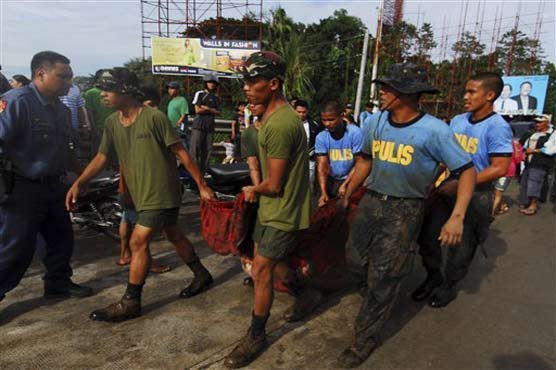
With funeral parlors overwhelmed, authorities in a flood-stricken southern Philippine city organized the first mass burial of some of nearly 700 people who were swept to their deaths in one of worst calamities to strike the region in decades.For the first time in a day, the staggering death toll from Friday nights disaster, spawned by a tropical storm, remained little changed but the number of missing varied widely. Official figures put the missing at 82, while the Philippine Red Cross estimated 800.The disparity underscores the difficulty in accounting for people who could be buried in the mud and debris littering much of the area or could be alive but lost in crowded evacuation centers or elsewhere.We lost count of how many are missing, said Benito Ramos, head of the governments Office of Civil Defense.In Iligan, a coastal industrial hub of 330,000 people, Mayor Lawrence Cruz said the citys half a dozen parlors were full to capacity and no longer accepting bodies. The first burial of 50 or so unclaimed bodies was to take place later Monday in individual tombs at the city cemetery, he said.In a grim sign of desperation, a funeral parlor dumped about 30 badly decomposed bodies in a city garbage dump over the weekend, sparking protests from distraught villagers who were looking for the missing loved ones.Ramos, the head of the agency that is spearheading the recovery and relief operations, attributed the high casualties partly to the complacency of people because they are not in the usual path of storms despite warnings by officials that one was approaching.Weve had flooding before but nothing like this, Cruz, the Iligan mayor said, recalling floods in the early 1950s. We have a good drainage system but it as simply overwhelmed. The rainfall fell heavily on the mountains and this flowed down to two of our river systems and they overflowed and swept away houses and covered the highway and residential areas.About 143,000 people were affected in 13 southern and central provinces, including 45,000 who fled to evacuation centers. About 7,000 houses were swept away, destroyed or damaged, the Office of Civil Defense said.An estimated 35 percent of evacuees are children, said Trevor Clark, head of UNICEF in the southern Mindanao region.Running water and hygiene were major concerns, followed by a lack of clothing, blankets and even shoes for young children, he said.Although he said government agencies were responding in a quick and efficient manner, they were overwhelmed and the United Nations was preparing an appeal for urgent assistance from donors and foreign governments.