Updated on
Summary Nine months after popular uprising that pushed Mubarak out, Egyptians prepared to vote on Monday.
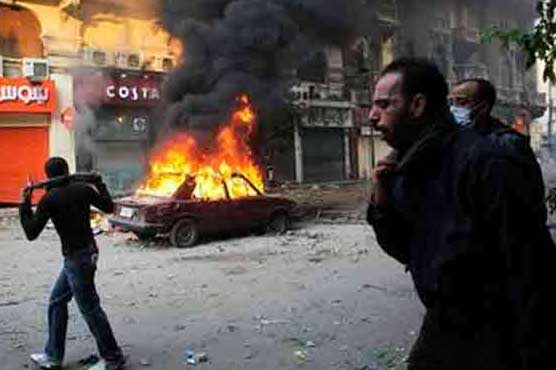
Egyptians prepared to vote Monday in the first elections since Hosni Mubaraks ouster, a milestone many hoped would usher in a democratic age after decades of dictatorship. Instead, the polling is already marred by turmoil in the streets and the population is sharply polarized and confused over the nations direction.Nine months after the popular uprising that pushed Mubarak out, protesters are back in the streets. This time, they are demanding that military ruler Field Marshal Hussein Tantawi and his council of generals step down immediately, accused of bungling the transition. Nine days of clashes that have left more than 40 dead have heightened fears of violence at polling stations.More critically, the political crisis has cast doubt on the legitimacy of the vote, which is expected to be dominated by Islamic parties. That could render the parliament that emerges irrelevant.We have no idea who we are going to vote for, said Mustafa Attiya Ali, a 50-year-old barber in Cairo. We dont know any of the candidates, but I and my friends will get together tonight and decide who to vote for.Egypts military rulers decided to forge ahead with the elections despite the new wave of unrest, scenes starkly reminiscent of the first uprising. On Sunday night in Cairos Tahrir Square, the centre of the original uprising, a relatively small crowd of a few thousand braved a rare rainstorm to keep the round-the-clock protests going.Egypt has not had a fair or clean election in recent memory. The last parliamentary vote held under Mubarak was in November and December a year ago and it was so fraudulent, the ruling party won all but a handful of seats.Tantawi and other generals have pledged to ensure a clean election and troops and police began deploying on Sunday evening to protect thousands of polling centers. Foreign groups sent missions to witness the vote, but officially the military banned international election observers.A high turnout will likely benefit the military because the vote is a crucial part of a road map it proposed for a transfer of power to civilian authorities ending with presidential elections before the end of June 2012.High turnout may also undermine the tens of thousands of anti-military protesters many of them see the vote as inconsequential. It could also dilute the Islamist vote because the majority of Egyptians, while pious, prefer separation of religion and politics.