Updated on
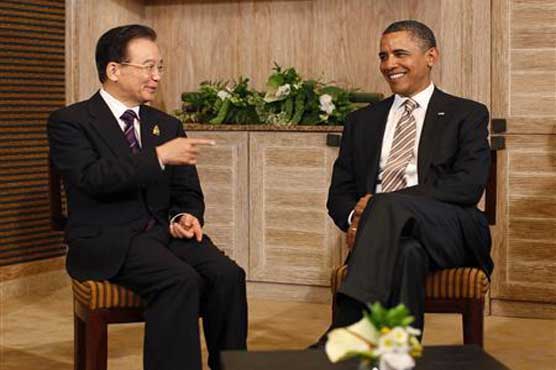
Summary President Barack Obama and Chinese Premier Wen Jiabao conferred Saturday in a surprise meeting.
It took place on the sidelines of a major Asian summit, focusing on the economic matters that have prompted disputes between the two major world powers. The session was not a formally planned moment of diplomacy but rather a late add-on to let the two men continue their conversation from a group dinner the night before.We have a very complicated and quite substantial relationship with China across the board, White House National Security Advisor Tom Donilon told reporters after the session. We do have economic issues. They are around the proper contribution that the Chinese make to global growth and that goes to currency and other policies, he added.He said Obama stressed the importance of China adjusting the value of its currency, which the United States contends is deeply undervalued. But Donilon also downplayed tensions between the two powers, saying they also have found vast areas of agreement. The meeting came on the last leg of Obamas nine-day Asia-Pacific trip, in which he has focused on bulking up Americas presence in the region, including setting up a Marine task force in Australia, in moves largely seen as hedges against Chinas rise. The U.S. also played up a trade partnership with Asian and Pacific Rim countries that did not include China.The last-minute meeting underscored the significance of China in the U.S. eyes, however. Obama met with Chinese President Hu Jintao just last weekend in Hawaii for an Asia-Pacific economic summit. Only photographers and a videographer were allowed in at the start of the meeting with Wen, where the two men exchanged small talk.China has been angered by the U.S. stand that it has a stake in security and unhampered international commerce in the disputed territorial waters of the South China Sea. Wen had told a meeting of Southeast Asian nations on Friday that external forces should not use any excuse to interfere in territorial disputes in the sea.China claims all of the sea, while several Southeast Asian nations claim parts.Donilon said the United States, as a maritime power, wants territorial disputes resolved peacefully. We do believe they should be resolved in accordance with international norms and international law, he said. Wens portfolio, though, is chiefly economic, and that is where his conversation with Obama focused, Donilon said. The United States and China have been tussling not only over Chinas currency, but over intellectual property. Obama has been challenging China to operate with a greater sense of international rules.Donilon rejected suggestions that Obamas trip was designed to thwart a rising China. The U.S. policy, he said, was about rebalancing U.S. interests and focusing once more on the Asia-Pacific region. This has nothing to do with isolating or containing anybody, he said.
Featured