Updated on
Summary Indian defence minister said that the Unified Command will decide removal of military from Kashmir.
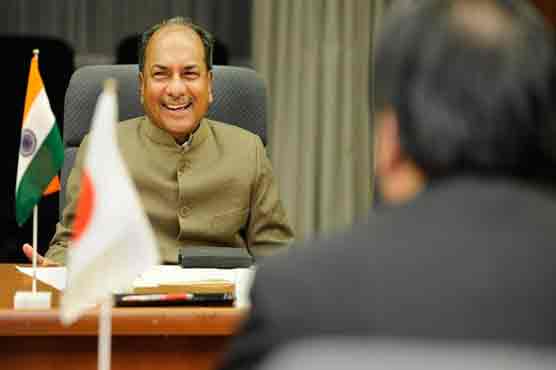
Federal Defence Minister A K Antony on Friday said that the Unified Command would take the decision on the revocation of the controversial anti-militancy law, the Armed Forces Special Powers Act (AFSPA) from certain regions of Indias Kashmir.Speaking on the sidelines of a conference on national security in New Delhi, the defence minister said the Cabinet Committee on Security (CCS) has left it on the Unified Command to take a call on the issue.Chief of Indias northern state of Jammu and Kashmir, Omar Abdullah recently called for the repeal of the AFSPA from certain regions of the state.The revocation of the law, in place for more than two decades in Kashmir, could be seen as a first step by New Delhi to win hearts in the countrys only Muslim-majority region.On Wednesday, Abdullah held detailed discussions with the Unified Command of the Army on the dilution of AFSPA in the state.Passed in 1958, the Armed Forces Special Powers Act confers special powers on defence personnel in areas declared as disturbed by the government. The law has come under fire over allegations of widespread human rights violations in the places where it has been imposed.The row over Kashmir remains an emotionally charged issue for both India and Pakistan.The restive region has witnessed numerous militant attacks, insurgency, and infiltration attempts from across the border in the last two decades.The Himalayan region is one of the worlds most militarised zones, with India deploying more than 1.3 million troops to quell the rebellion that triggered off in 1989.More than two decades ago, an armed rebellion broke out in the region against New Delhis rule. But while militancy has weakened over the years, the tactic of mass street protests has grown.Since Indian Kashmir first witnessed insurgency in 1980s, nearly 50,000 people have been killed in the strife-torn region.
Featured