Updated on
Summary A new UN report concludes man-made climate change has boosted rough weather.
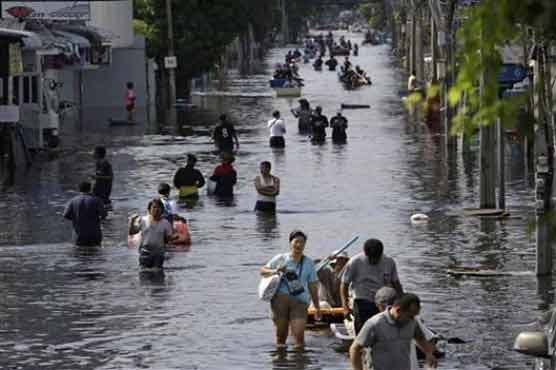
The report said disasters such as wildfires, floods and cyclones are likely to multiply in the future.The draft document, which has been three years in the making, says the severity of the impacts vary, with some regions more vulnerable than others.Hundreds of scientists working under the Intergovernmental Panel for Climate Change (IPCC) will vet the phonebook-sized draft at a meeting in Kampala of the 194-nation body later this month.This is the largest effort that has ever been made to assess how extremes are changing, said Neville Nicholls, a professor at Monash University in Melbourne, Australia, and a coordinating lead author of one of the reviews key chapters.The reports authors stress that the level of confidence in the findings depends on the quantity and quality of data available.But the overall picture that emerges is one of enhanced volatility and frequency of dangerous weather, leading in turn to a sharply increased risk for large swathes of humanity in coming decades.AFP obtained a copy of the draft reports 20-page Summary for Policymakers, which is subject to revision by governments before release on November 18.A series of natural catastrophes around the world has boosted the need to determine whether such events are freaks of the weather or part of a long-term shift in climate.In 2010, record temperatures fuelled devastating forest fires across Siberia, while Pakistan and India reeled from unprecedented flooding.This year, the United States has suffered a record number of billion-dollar disasters from flooding in the Mississippi and Missouri Rivers to Hurricane Irene to a drought in Texas.China is reeling from lack of water too, even as central America and Thailand count their dead from recent flooding.These events match predicted impacts of global warming, which has raised temperatures, increased the amount of water in the atmosphere and warmed ocean surface temperatures -- all drivers of extreme weather.But teasing apart the role of natural fluctuations in the weather and rising levels of greenhouse gases in the atmosphere has proven devilishly difficult.The nine-chapter Special Report on Managing the Risks of Extreme Events and Disasters to Advance Climate Change Adaptation, or SREX, pored over hundreds of recent scientific studies in search of patterns.The new reports main conclusions about future trends include:It is virtually certain -- 99-100% sure -- that the frequency and magnitude of record-hot days will increase over the 21st century on a global scale.It is very likely (90-100% certainty) that the length, frequency and/or intensity of warm spells, including heat waves, will continue to increase over most land areas.Peak temperatures are likely (66-100% certainty) to increase -- compared to the late 20th century -- up to 3.0 degrees Celsius (5.4 degrees Fahrenheit) by 2050, and 5.0 C (9.0 F) by 2100.Heavy rain and snowfall is likely to increase, especially in the tropics and at high latitudes.At the same time, droughts will likely intensify in the Mediterranean region, central Europe, North America, northeastern Brazil and southern Africa.Rising and warming seas are also very likely to boost the destructive power of cyclones, while melting glaciers and permafrost, along with heavier precipitation, will trigger more landslides.The Carnegie Institutions Chris Field, co-chair of the IPCCs Working Group 2, would not comment on the reports conclusions, but said they would help shape political choices.When the SREX is finalized and approved by the worlds governments, it will provide a solid foundation for smart policies on managing risks from climate extremes and climate-related disasters, he said by email.The IPCCs landmark Fourth Assessment in 2007 said global warming was unequivocal and that human activity was almost certainly largely to blame.