Updated on
Summary No shoes are allowed in the Sacred Space tent here, but you can bring just about any faith.
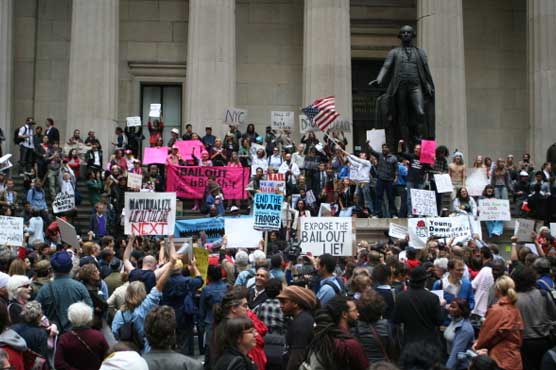
Downtown Dewey Square is crammed with tents and tarps of Occupy Boston protesters, but organizers made sure from the start of this weeks-old encampment that there was room for the holy.No shoes are allowed in the Sacred Space tent here, but you can bring just about any faith or spiritual tradition.A days schedule finds people balancing their chakras, a compassion meditation and a discussion of a biblical passage in Luke. Inside, a Buddha statue sits near a picture of Jesus, while a hand-lettered sign in the corner points toward Mecca.The tent is one way protesters here and in other cities have taken pains to include a spiritual component in their occupations. Still, Occupy Wall Street is not a religious movement, and signs of spiritually arent evident at all protest sites.Clergy emphasize they are participants in the aggressively leaderless movement, not people trying to co-opt it. Plus, in a movement that purports to represent the 99 percent in society, the prominent religious groups are overwhelmingly liberal.Religion might not fit into the movement seamlessly, but activist Dan Sieradski, whos helped organize Jewish services and events at Occupy Wall Street, said it must fit somewhere.Were a country full of religious people, he said. Faith communities do need to be present and need to be welcomed in order for this to be an all-encompassing movement that embraces all sectors of society.Religious imagery and events have been common since the protests began. In New York, clergy carried an OldTestament-style golden calf in the shape of the Wall Street bull to decry the false idol of greed. Sieradski organized a Yom Kippur service. About 70 Muslims kneeled to pray toward Mecca at a prayer service Friday.A Chicago group, Interfaith Worker Justice, has published an interfaith prayer service guide for occupation protests nationwide.Clergy who support the protests say they are a natural fit with many faiths, because they share traditional concerns about economic injustice. They also point to history, including the anti-slavery and civil rights movements.Every movement for social change that has really made a difference has included the power of God, the power of the spirit and the power of people of conscience, said the Rev. Stephanie Sellers, one of the Episcopalian protest chaplains praying with protesters at different sites.In Boston, Marty Dagoberto said the Sacred Space was also created in an unforced way, after he suggested the idea at Occupy Bostons first general gathering. He said the space helps promote a spirit of calm and unity crucial to bringing change.I feel like its really important for us to stay rooted in love, simply put, Dagoberto said.Religious elements havent sprouted up as visibly in other Occupy Wall Street movements nationwide, said Elizabeth Drescher, a lecturer on Christian spirituality at Santa Clara University, who has visited the occupations in Santa Cruz and St. Louis.She said some protesters are wary because they dont recognize the authority of institutions, including religious ones, and are generally looking for clergy to be ministering but not proselytizing. She recalled a conversation with an Occupy Santa Cruz protester while a man in a clerical collar picked up trash.Imam Al-Hajj Talib Abdur-Rashid, who helped organize Fridays Muslim prayer service in New York, believes religious groups have already amplified the movements power. He sees his involvement as a duty, because so many in his congregation are affected by the nations economic woes.If Moses or Jesus or Mohammed were alive in this day and time theyd be out there guiding and inspiring and teaching these young people, he said.