Updated on
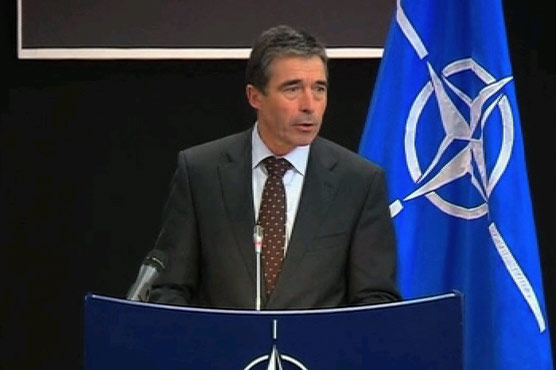
Summary NATO Secretary General said the alliance agreed Friday to wind down Libya operation until Oct. 31.
NATO Secretary General Anders Fogh Rasmussen said Friday following a meeting of the alliances governing body that the bloc made a preliminary decision to end air operation on October 31, and will make a formal decision next week.The council took into account the wishes of Libyas new government and of the United Nations, under whose mandate NATO carried out its operations.After Libyas former rebels killed Gadhafi on Thursday, officials had said they expected the aerial operation to end very soon.The success of the military operation has helped reinvigorate the Cold War alliance and polished the reputation of France and Britain, the two countries that drove it forward.Analysts attributed its success to the fact that NATO remained steadfast over the summer during a long and grinding stalemate against Gadhafi loyalists and avoided the temptation to send ground troops into Libya.NATO earlier said its commanders were not aware that Gadhafi was in a convoy that NATO bombed as it fled Sirte. In a statement Friday, the alliance said an initial Thursday morning strike was aimed at a convoy of approximately 75 armed vehicles leaving Sirte, the Libyan city defended by Gadhafi loyalists. One vehicle was destroyed, which resulted in the convoys dispersal.Another jet then engaged approximately 20 vehicles that were driving at great speed toward the south, destroying or damaging about 10 of them.We later learned from open sources and allied intelligence that Gadhafi was in the convoy and that the strike likely contributed to his capture, the statement said.Intelligence gleaned during surveillance flights around Sirte on Thursday indicated that a command and control group, including senior military leaders were attempting to flee from the town, Camerons spokesman Steve Field said.There was a strike, there was damage to the convoy, the Free Libya Fighters then moved in as to what happened next that is not entirely clear, he said.Rasmussen hailed the success of the mission, saying that it demonstrated that the alliance continues to play an indispensable role in confronting current and future security challenges.NATO warplanes have flown about 26,000 sorties, including over 9,600 strike missions. They destroyed Libyas air defenses and over 1,000 tanks, vehicles and guns, as well as Gadhafis command and control networks.