Summary Spain votes in election that could swing the country to the right
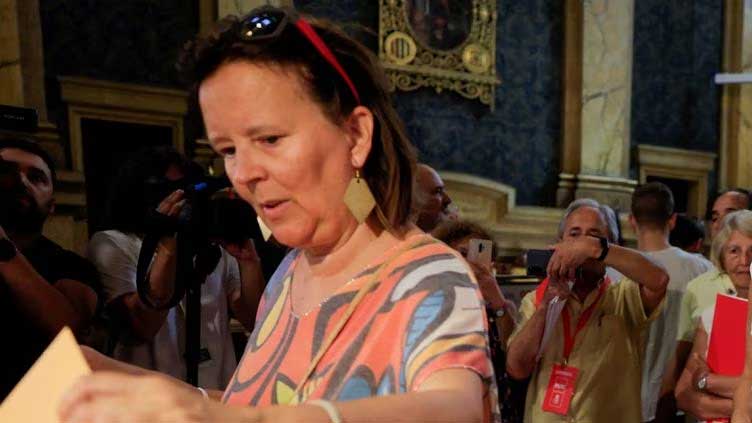
MADRID (Reuters) - Spaniards voted in a potentially close-run general election on Sunday that could see Prime Minister Pedro Sanchez's governing Socialists lose power and a far-right party make up part of a new government for the first time in 50 years.
Sanchez called the election early after the left took a drubbing in local elections in May, but his gamble to wrong-foot his opponents could backfire.
Opinion polls show the election will likely produce a win for Alberto Nunez Feijoo's centre-right People's Party, but to form a government it would need to partner with Santiago Abascal's far-right Vox. This would be the first time a far-right party has entered government since Francisco Franco's dictatorship ended in the 1970s.
Voting will close at 8 p.m. (1800 GMT) (9 p.m. in the Canary Islands) when voter surveys conducted via phone calls over the past week will be released. All ballots are expected to be counted by midnight, confirming the party with the most votes.
Both the left and right blocs have the potential to form coalitions, which will need at least 176 seats in the 350-seat lower house of congress. A new parliament must be constituted by Aug. 17, but negotiations between parties to form a government can go on for months.
An analysis of opinion poll data by Spain's El Pais newspaper on July 19 when polling ended projected a 55% chance of a PP/Vox coalition, a 15% chance of Sanchez staying in power with a patchwork leftist coalition and 23% chance of a hung parliament and a repeat election.
As Sanchez went to vote in Madrid he was greeted by one small group of people shouting "liar" and a similar-sized group shouting "prime minister", TVE footage showed. He told reporters he had "good feelings" about the election outcome.
The prime minister's minority government is currently in coalition with far-left Unidas Podemos that is running in Sunday's election under the Sumar platform.
Feijoo said he hoped Spain could begin a "new era".
VOX leader Abascal said "the important thing today is whether Spain changes course" and thanked voters for "disrupting their rest" to cast their ballots, while Sumar leader Yolanda Diaz said "rights are at stake" and urged people to vote in what were "likely the most important elections" for her generation.
The election took place in the summer holidays and amid intense heat for much of the country.
Voter turnout stood at around 40.5% at 2 p.m. (1200 GMT), according to the Interior Ministry, up from 37.9% recorded at the same time during the last election in November 2019.
Postal workers arrived at polling stations with boxes of postal votes, after the postal service reported on Saturday that these had set an all-time record of 2.47 million as people cast their ballots from the beach or mountains.
"The status quo scenario and a hung parliament are still a real possibility, likely with 50% combined odds in our view," Barclays wrote in a recent note to clients, citing the thin margin in PP's favour and overall uncertainty regarding polling and voter turnout.