Summary Rights activists fear Tunisia deal will be model for bartering EU money for migrants’ lives
TUNIS, Tunisia (AP) — Migrants in Tunisia’s port city of Sfax who are aiming to make Europe their new home are now sharing the burden and the blame for escalating tensions deeply tinged with racism, amid the fears of European leaders who are trying to stanch the numbers of people arriving at their shores.
The antagonism that exploded this month in Sfax between Tunisians and mainly Black sub-Saharan migrants are widely seen as a turning point in how this North African nation deals with the issue of migration — and an opportunity to be seized by Europe.
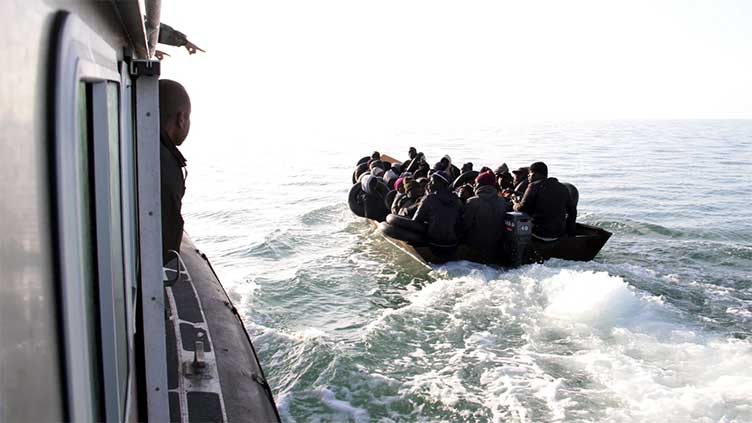
Hundreds of migrants have drowned at sea trying to reach Italy in fragile boats, but now migrants awaiting their chance to cross the Mediterranean cower in fear, some beaten or bused by authorities to new destinations, others dumped in the desert.
A meeting this week in Tunis of human rights activists from North Africa, West Africa and Europe denounced a summit on migration this Sunday in Rome, saying its goal is to pursue an anti-migrant vision and put the onus on Africa to keep European borders safe from African arrivals. Human Rights Watch also denounced the upcoming Rome gathering, predicting that it will amount to a bartering of values for financial incentives to stave off migrants from European shores.
“Today, the Mediterranean’s calling is no longer to be a bridge between two shores, but a wall separating all of Europe from all of the African continent,” said the Tunisian Forum for Economic and Social Rights, which organized the Thursday meeting.
Italy is trying to decrease the number of migrant arrivals and stabilize Tunisia, in its worst economic crisis in a generation. Thousands of migrants have arrived in Sfax this year, but there’s no solid figure of how many are in the city, or how many have left since the anti-migrant campaign started.
Tunisia has become the main stepping stone to Italy, Europe’s gateway, replacing Libya, where widespread abuse of migrants has been reported. Of the 76,325 migrant arrivals in Italy so far this year until last Sunday, 44,151 took the sea route from Tunisia compared to 28,842 leaving from Libya, according to the U.N. High Commissioner for Refugees.
President Kais Saied, Tunisia’s increasingly authoritarian leader, stoked racist reactions to migrants in February, saying that sub-Saharans arriving in huge numbers are part of a plot to erase Tunisia’s Islamic identity. He has since tried to walk back such pronouncements, denying claims of racism and saying the migrant issue must be treated at its roots.
That’s one intent of the Rome conference, which will gather nearly 20 heads of state and government or ministers from the Middle East to the Sahel and North Africa, along with European Union chief Ursula von der Leyen and an array of financial institutions.