Summary Cradle of Sudan's uprising becomes transit point for those fleeing war
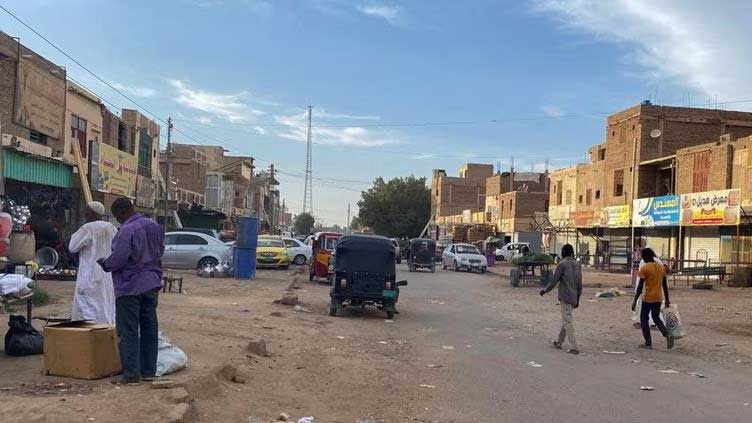
ATBARA, Sudan (Reuters) - The Sudanese city of Atbara - birthplace of the uprising that led to the overthrow of strongman Omar al-Bashir in 2019 - has become a hub for those fleeing the conflict in Khartoum.
But while it has been spared the heavy fighting that erupted in the capital two weeks ago, the power struggle between rival military factions there has dealt the latest blow to the hopes of Atbara's pro-democracy activists.
Some of those who arrived in the city, a colonial-era railway hub about 350 km (220 miles) northeast of Khartoum, have sought accommodation in the city. Others are passing through on their way to Port Sudan on the Red Sea coast or Sudan's northern border with Egypt.
Some are still figuring out their plans.
"We came to Atbara looking for safety after the war in Khartoum. We left our homes and lives there, and we don't know how we're going to continue," said 35-year-old Omeima Yasin, holding her child.
The fighting between Sudan's army and the paramilitary Rapid Support Forces (RSF) has killed hundreds, injured thousands, and displaced 33,000 from the capital, according to the United Nations.
The airport in Khartoum is being fought over and is damaged. Some of those fleeing have tried to leave the country by bus or ship, but most have sought shelter in cities, towns and villages outside the capital.
Atbara, which has a history of political opposition activity and a strong labour movement linked to its railways, was the site of the first big demonstrations against Bashir's autocratic rule that led to his overthrow in April 2019.
It does not normally receive many visitors, but the strife elsewhere has been a boon for local businesses.
"The hotel has never seen this kind of demand as it has since the start of the war, and that's caused prices to go up to 30,000 Sudanese pounds ($50) a night," said an owner of one of the city's few hotels.