Summary Ukraine, U.N. call for extension of Black Sea grain export deal
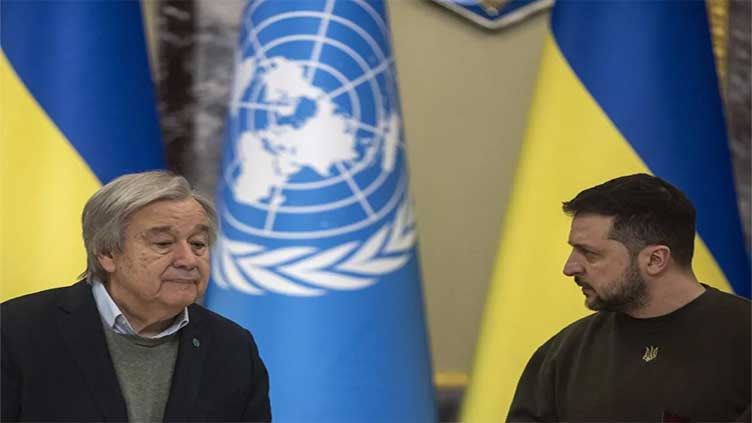
KYIV (Reuters) - Ukraine's president and United Nations Secretary-General Antonio Guterres called on Wednesday for the extension of a deal with Moscow that has allowed Ukraine to export grain via Black Sea ports during Russia's invasion.
President Volodymyr Zelenskiy said after talks with Guterres in Kyiv that the Black Sea Grain Initiative was "critically necessary" for the world, and the U.N. chief underlined its importance to global food security and food prices.
The 120-day deal, initially brokered by the United Nations and Turkey last July and extended in November, will be renewed on March 18 if no party objects.
Russia's demands, however, have not yet been met, a Turkish diplomatic source said, adding that Ankara was "working very hard" to ensure the deal continues.
Top U.N. trade official Rebeca Grynspan, who travelled with Guterres to the Ukrainian capital, will meet senior Russian officials in Geneva next week to discuss extending the deal, a U.N. spokesperson said.
"I want to underscore the critical importance of rolling over the Black Sea Grain Initiative on 18th March and working to create the conditions to enable the greatest possible use of export infrastructure through the Black Sea in line with the objectives of the initiative," Guterres told reporters in Kyiv.
Russia, which lifted a blockade of three Ukrainian Black Sea ports under the deal, has signalled that obstacles to its own agricultural exports need to be removed before it lets the agreement continue.
To help convince Russia to allow Ukraine to resume its Black Sea grain exports, a three-year deal was struck last year in which the U.N. agreed to help facilitate Russian food and fertilizer exports.
SANCTIONS
Western powers have imposed tough sanctions on Russia for its invasion of neighbour Ukraine on Feb. 24 last year.
While Russia's food and fertilizer exports are not subject to sanctions, Moscow says restrictions on its payments, logistics and insurance industries are a "barrier" to such shipments.
"Russia's concerns, or the rather the difficulties that it is facing, have not been overcome yet. But Turkey is doing its part for an agreement between all parties," the Turkish diplomatic source said.
Ukraine and Russia are both major global suppliers of grains and fertilizers. Before the war, Ukraine was the world's fourth-largest corn exporter and fifth-biggest wheat seller, a main supplier to poor countries in Africa and the Middle East that depend on grain imports.