Summary The calculus of war: Tallying Ukraine toll an elusive task
GENEVA (AP) — Quantifying the toll of Russia’s war in Ukraine remains an elusive goal a year into the conflict.
Estimates of the casualties, refugees and economic fallout from the war produce an incomplete picture of the deaths and suffering. Precise figures may never emerge for some of the categories international organizations are attempting to track.
U.N. human rights experts count civilians killed and wounded, but know their tally falls significantly short. Neither Russia nor Ukraine has provided an updated accounting of their troop losses.
Even the scope of the weaponry that Western countries have sent Ukraine is murky.
Here’s a look at some of the numbers as Friday marks one year since Russian forces invaded Ukraine, with no end to the war in sight.
THE EVOLUTION OF AN INVASION
Roughly 5,000 missile strikes, 3,500 airstrikes and 1,000 drone strikes: Firepower that Russia has launched against Ukraine over the past year, according to Brig. Gen. Oleksiy Hromov, a senior official in the General Staff of the Ukrainian Armed Forces.
The percentage of total Ukrainian land controlled by Russian forces as of Thursday, according to the Institute for the Study of War, a think tank. That’s down from 27% on March 23, before Ukrainian counteroffensives recaptured vast swaths of land — but up from the 7% held by Russia and Russia-aligned separatists before Feb. 24, 2022, as part of an armed rebellion in eastern Ukraine that began in 2014, and Russia’s annexation of Crimea that year.
THE CASUALTIES
8,006: Confirmed civilian deaths in Ukraine since Russia’s invasion, through Feb. 15, according to the U.N. human rights office. The office uses strict methodology and says verification of thousands of reported casualties is still pending in Russian-occupied cities such as Mariupol, Lysychansk, and Sievierodonetsk.
REFUGEES AND DISPLACED PEOPLE
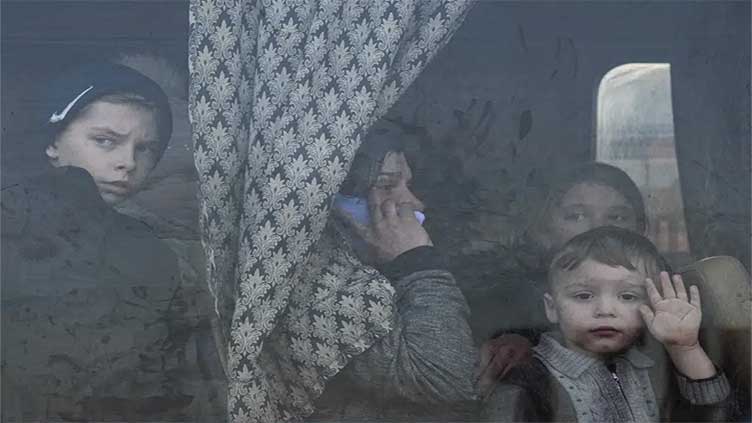
8.1 million: Refugees who fled Ukraine after the Russian invasion, based on figures provided by national governments. The number includes more than 5.2 million in over 40 European and central Asian countries, including nearly 1.6 million in Poland, over 880,000 in Germany and nearly 2.9 million who went to Russia,
according to U.N. refugee agency UNHCR.
ECONOMIC COST
$138 billion: The total damage caused to Ukraine’s infrastructure due to the war, according to the latest Kyiv School of Economics figure from Jan. 24.
33%: Minimum drop in Ukraine’s gross domestic product in 2022 expected by the International Monetary Fund. Final numbers are pending.
INTERNATIONAL SUPPORT FOR UKRAINE
$113 billion: Emergency funding for the Ukraine response approved by U.S. Congress last year. Includes about $62 billion to be provided through the Defense Department, nearly half of it for weapons, training and other “direct security assistance,” and $46 billion through the State Department and U.S. Agency for International Development, according to the Pentagon and an inter-departmental report issued last month.
$59 billion (55 billion euros): Total commitments to Ukraine from European Union member nations and EU institutions, according to IFW Kiel.
$14 billion (13 billion euros): Pledges and allocations from non-country donors, including the International Monetary Fund, the World Bank and European Bank for Reconstruction and Development.