Summary Sudan has suffered through decades of conflict
KHARTOUM (AFP) - The large partly desert African nation of Sudan, where the army on Thursday ended Omar al-Bashir’s 30-year rule following months of protests, has suffered through decades of conflict.
Here is some background about the country.
Military coups
Sudan gained independence in 1956 after a period of joint rule by Britain and Egypt.
It has a mainly Muslim population of 40.5 million, according to 2017 figures from the World Bank. Arabic is the official language and Islamic Sharia law has been in force since 1983.
From June 1989 to April 2019 Sudan was led by Bashir, a career soldier who swept to power in a military coup backed by Islamists.
Bashir was elected president in 2010 in the country’s first multiparty election since he took power and re-elected in 2015. The opposition boycotted both votes.
Unrest broke out in 2013 after petrol prices skyrocketed and security forces killed dozens of protesters.
Demonstrations against food price hikes erupted in early 2018 and again in December after the cost of bread tripled.
The protests continued for nearly four months and dozens were killed in the violence before the army on April 11 removed Bashir from power.
South Sudan breaks away
Sudan endured a first civil war from 1955 to 1972, while a second -- between northern and southern rebels -- lasted from 1983 to 2005.
Millions died in the conflicts.
In 2005 Khartoum signed a peace treaty with the southern rebels granting the south autonomy pending a referendum on independence in 2011.
South Sudan proclaimed its independence in July 2011, six months after voting by 99 percent to secede.
The split removed roughly a quarter of Sudan’s territory. Before then it had been Africa’s largest country.
In early 2012 relations with South Sudan deteriorated, their armies clashing in oil-rich border zones.
Devastating Darfur
In 2003 rebels in Sudan’s vast arid western region of Darfur revolted against alleged political and economic marginalisation of black ethnic groups by the Arab-dominated regime in Khartoum.
Khartoum responded by unleashing the Janjaweed militia, blamed for atrocities including murder, rape, looting and burning villages.
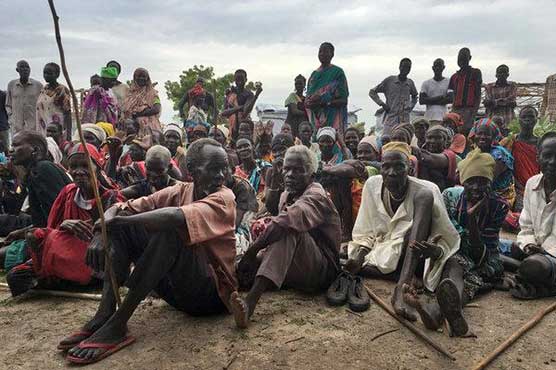
The violence, which has significantly dropped in recent years, resulted in one of the world’s worst humanitarian catastrophes.
The United Nations says about 300,000 people have been killed and more than 2.5 million displaced, many living sprawling semi-permanent camps.
The International Criminal Court in 2009 and 2010 issued arrest warrants for Bashir for genocide, crimes against humanity and war crimes in Darfur -- accusations he denies.
Battered economy
The 2011 secession of South Sudan hit the Sudanese economy badly as it lost around three-quarters of its oil reserves and most of its revenues from the resource.
The country also suffered under a US economic embargo imposed in 1997 over its alleged backing of radical Islamist groups and the Darfur conflict.
The embargo was lifted in 2017 but Sudan remains on a US blacklist of state terror sponsors, deterring investors.
Inflation runs at nearly 70 percent and several towns face shortages of bread and petrol.
Agriculture and livestock farming represent 35 to 40 percent of Sudan’s gross domestic product, according to the World Bank.
It is one of the world’s most impoverished countries, ranked at 167 out of 189 on the UNDP’s Human Development Index (2018), which compares longevity, education and per capita income.
Ancient treasures
Sudan’s ancient civilisations built more pyramids than the Egyptians, but they remain largely unexplored.
The archaeological site of the Island of Meroe, 220 kilometres (136 miles) north of Khartoum, is ranked on UNESCO’s list of world heritage sites.
It was the heartland of the Kingdom of Kush, a major power from the 8th century BC to the 4th century AD, UNESCO says on its website.