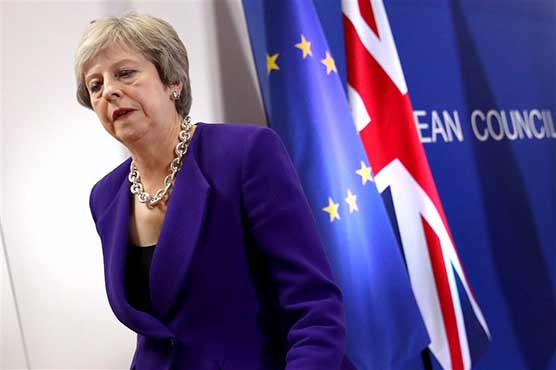
Summary British Prime Minister Theresa May hopes it will happen before the parliamentary break.
BRUSSELS (AFP) - Even if European Union leaders approve the terms of Britain s divorce from the bloc at their summit on Sunday, the deal will still have to clear more major hurdles.
The following are the next steps in the process leading to Britain s exit from the EU on March 29, 2019, at 2300 GMT.
Future ties
According to the "political declaration" that will accompany the legal withdrawal agreement, after the summit London and Brussels must quickly begin preparing to negotiate their future relationship.
But formal negotiations, particularly on a trade deal, can only begin after Brexit on March 29 next year, when the United Kingdom is once again able to negotiate with the EU as a non-member.
British parliament
The withdrawal agreement s ratification by the British parliament may prove to be its toughest obstacle.
British Prime Minister Theresa May hopes it will happen before the parliamentary break that begins December 21.
It will be up to May s government to present a bill on the withdrawal and Brexit s implementation, and her text will face bitter opposition.
The EU treaties of Rome and Maastricht took around 40 days to be approved in the House of Commons and the House of Lords.
There remain between 60 to 70 days of parliamentary session between Sunday s summit and March 29.
European Parliament
The members of the European Parliament will likely await the green light of the British legislature to launch their own ratification procedure.
This provides for drafting a report on the withdrawal treaty and the political declaration before a simple majority vote in a plenary session.
The ratification vote should take place at the beginning of 2019 but it could theoretically wait until March 28, the last day of the parliamentary session before Britain s withdrawal takes effect.
Last EU green light
After its ratification by the European Parliament, the withdrawal treaty must be approved by the EU member states by so-called qualified majority: 72 percent of the 27 member countries representing 65 percent of the population of these countries.
This approval will be given by ministers from the 27 capitals meeting as the European Council.