Updated on
Summary What is important is that people are coming. We need a new Egypt.
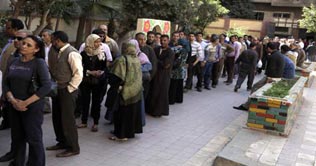
Egyptians turned out in droves on Saturday to get their first taste of democracy after president Hosni Mubarak was forced to relinquish his 30-year grip on power last month in the face of mass protests.Just five weeks after the strongman quit, an estimated 45 million voters were being asked to say yes or no to a package of constitutional changes intended to guide the Arab worlds most populous nation through fresh presidential and parliamentary elections within six months.Long queues formed outside voting centres throughout the day, something unheard of in the Mubarak era, when turnout was always minuscule as voters assumed their ballots would make no difference. Hordes of voters flocked to polling stations across Cairo from the posh neighbourhood of Zamalek to the working class district of Imbaba.Large turnout was witnessed around the country from the Nile Delta to the Suez Canal to the Sinai peninsula. In Suez, returning officers even had to ask for more ballot boxes, security officials said.Monitors from the Egyptian Association for Community Participation Enhancement (EACPE) reported that some voting centres had opened late because staff had been caught out by the numbers already queuing.Organisers said judges in charge of each of the nearly 50,000 polling stations had been authorised to countersign ballot papers to reassure voters following numerous complaints about ones that did not bear an official stamp.Arab League chief Amr Mussa, an Egyptian who is a leading contender for president in eventual elections, hailed the huge turnout as he cast his vote in upscale Garden City.An appointed panel of experts drew up the proposed amendments in just 10 days, as the military council that took over from Mubarak strives to hand over power as quickly as possible and keep the army above the political fray.But the hasty, improvised nature of the proposed constitutional underpinnings of Egypts promised new democracy has driven many of the leading groups and figures behind the victorious protest movement to urge a no vote.The amendments are by and large uncontroversial but critics argue that they do not go far enough in overhauling the Mubarak-era charter, which they say needs to be completely rewritten.The president would serve a maximum of two four-year terms and the state of emergency that has governed Egyptian life for decades could only be imposed for six months without endorsement in a popular referendum.The main advocates of a yes vote have been the Muslim Brotherhood -- powerful and well-organised despite being outlawed under Mubarak -- and elements of his former ruling National Democratic Party.But his movement came in for criticism from EACPE for bussing in yes voters and putting up campaign publicity around polling stations.Critics say the Brotherhood and the former ruling party will gain the most if the amendments are approved and elections held quickly, with other groups needing more time to organise.