Summary The causes of the colour change are due to pollution, construction and insect dung. Photo: Getty
(Web Desk) – In a bid to save Taj Mahal, one of the Seven Wonders of the World, Supreme Court of India has asked the government to seek foreign help to fix the worrisome state of the building.
The famous Mughal architecture building made from white marble and other material is slowly changing its colour, according to BBC.
The colour of Taj Mahal changed from white to yellow and is now turning brown and green.
Instructing the government on their negligence, Supreme Court stated that, “even if you have the expertise, you are not utilising it. Or perhaps you don’t care”.
The causes of the colour change are due to pollution, construction and insect dung.
After thorough examination of the pictures submitted by the environmentalists, justices Madan Lokur and Deepak Gupta ordered the government to seek expertise from inside as well as abroad, reported the BBC.
Activists have also raised their concern over the marble’s lustre despite shutting down thousands of factories from the surrounding area of Taj Mahal. Constant cleaning is also said to have reduced its lustre.
.jpg)
Insect faeces are leaving green patches on the marble. Photo: Archaeological Survey of India
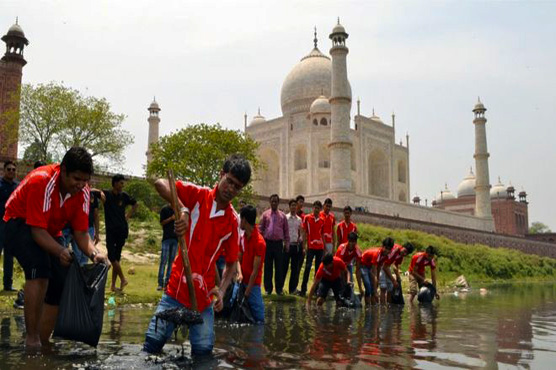
The other reason affecting the building’s colour is the sewage in the nearby Yamuna River, which flows alongside the structure. The river attracts insects that excrete waste onto its walls and stains them.
Built by the famous Mughal Emperor Shah Jahan in the famous city of Agra, Taj Mahal is one of the world’s leading tourist attractions, drawing as many as 70,000 people every day.
Taj Mahal’s white marble’s changing colour is not a new problem. Various attempts have been made to clean the white marble in the past two decades, but there are fears the problem is worsening.
The palace’s most recent mud bath took place in January during which the walls were scaled on scaffolds as workers plastered the surfaces with Fuller’s earth – a mud paste that absorbs dirt, grease, and animal excrement. The cleanup lasts up to more than six months.
The next hearing of the case is set for May 9.