Summary Dutch voters went to the polls in local elections Wednesday.
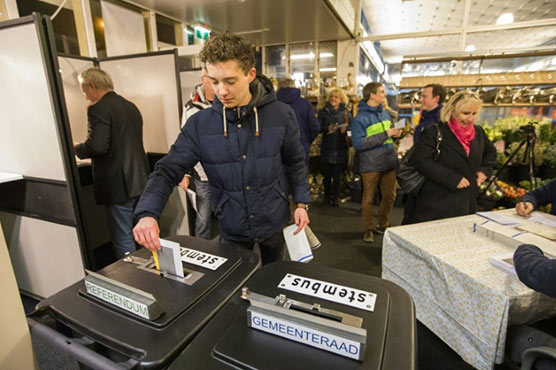
THE HAGUE (AFP) - Dutch voters went to the polls in local elections Wednesday with far-right parties hoping for gains, while all eyes were on a referendum over plans to extend government online spying powers.
More than 12 million voters are eligible to vote for councillors in the country s 380 municipalities, with ballots closing at 9:00 pm (2000 GMT). Initial exit polls and results are due soon afterwards.
However political analysts say that the local vote is being dwarfed by a simultaneous referendum over whether to back a new online security law.
The new legislation would allow the Dutch intelligence service AIVD to trawl for information by penetrating internet fibre-optic cables.
But angered by what they see as a bid by authorities to grab over-arching powers, a group of Amsterdam students won enough support to force a non-binding referendum on the law, set to come into effect on May 1.
- Far-right hopes -
===================
Despite early morning queues, Dutch media reported that by midday turnout was lower than in the last municipal elections in 2014.
Wednesday s ballot is also being seen as a test for far-right MP Geert Wilders, who took second place in general elections last year with his Freedom Party (PVV).
Rutte s liberal, business-friendly VVD party emerged as the biggest party in parliament with 33 seats, while the anti-Islam and eurosceptic PVV won 20 seats to become the country s main opposition.
Wilders is now hoping to boost his party s sway with PVV candidates running in some 30 municipalities, more than ever before.
"Right-wing parties gained in the national elections in 2017, mainly because of the weak attractiveness of the Left. That has not changed," said Ruud Koole, political science professor at Leiden University.
But the PVV is also facing a challenge from the far-right Forum for Democracy, led by the charismatic Thierry Baudet, who could well appeal to conservative and more educated, younger voters.
Baudet, a lawmaker with a rabble-rousing unorthodox style of parliamentary debate, won two seats in last year s national polls.
His party however is only standing in free-wheeling, left-leaning Amsterdam, while in Rotterdam it is backing a local party.