Summary New threats flared up in Texas on Thursday as a fire erupted at a chemical plant.
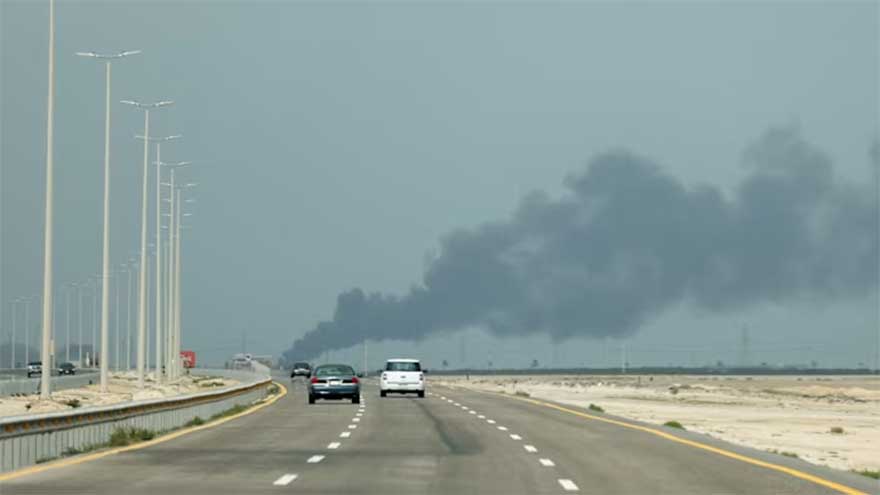
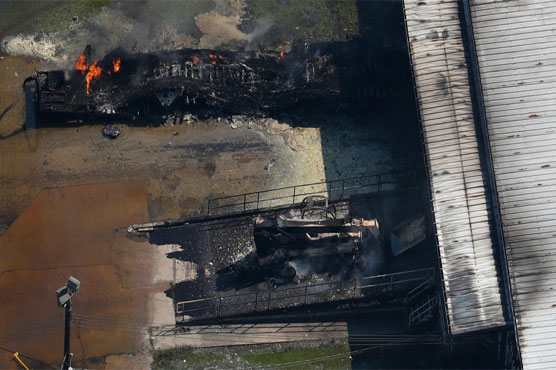
CROSBY (AFP) - Even as floodwaters eased in several parts of Texas battered by mega-storm Harvey, new threats flared up Thursday as a fire erupted at a chemical plant, spewing black smoke, and another hospital was forced to evacuate its patients.
In Houston, America s fourth-largest city, some of the 2.3 million residents got relief as the raging waters receded.
But in several other towns in the Lone Star State doused by days of torrential rains since Harvey smashed into the US Gulf Coast almost a week ago as a Category Four hurricane, the situation was dire.
Officials and volunteers were still scrambling to reach victims of the unprecedented flooding that has left at least 38 people dead and caused tens of billions of dollars of damage.
"We are still in response mode and that means life saving," Homeland Security adviser Tom Bossert told a White House briefing. "There are still people up to their waists in water."
Bossert estimated that 100,000 homes had been affected by flooding and said the White House would be asking Congress for emergency Harvey funds.
"Some (homes) were affected with eight feet (2.4 meters) of water or more," he said.
US Vice President Mike Pence flew into the Texas town of Rockport -- which sustained major damage when Harvey made landfall -- to assess damage from the storm and meet with victims.
"We re going to stay with you until we bring southeast Texas back to being bigger and better than ever before," Pence told residents.
President Donald Trump, who visited Texas on Tuesday, will return to the state on Saturday -- and may also visit Louisiana, which has seen serious flooding.
As relief efforts continued, a worrying pair of explosions rocked a flooded chemical plant in Crosby, a town of around 3,000 people some 25 miles (40 kilometers) northeast of Houston, sending a plume of smoke into the air.
Officials ordered residents living within 1.5 miles of the facility to evacuate amid concerns about the fumes emanating from the facility, which produces organic peroxides -- compounds that can combust if not cooled to the right temperature.
The company said organic peroxides could cause eye, skin or respiratory irritation as well as nausea, drowsiness or dizziness, and urged nearby residents to turn off their air conditioners to avoid possible smoke exposure.
Brock Long, the head of the US Federal Emergency Management Agency (FEMA), said the plume of fumes was "incredibly dangerous."
But the Environmental Protection Agency said it was reviewing data from an aircraft that surveyed the scene and had no indication that dangerous amounts of toxic materials have been released.
Officials for French company Arkema, which owns the facility, sought to tamp down the threat.
"We believe along with the local authorities that we ve moved everyone out of harm s way, and that no one is in danger," senior company executive Richard Rennard told a news conference.
Rennard said the overnight fire was triggered after a container of organic peroxides could no longer be refrigerated due to flooding that cut off power, adding that eight more containers were at risk of catching fire.
Fifteen sheriff s deputies who responded to the fire were briefly hospitalized.
Crosby resident Lane Averett, 59, told AFP at a church shelter in the town that he was worried about the animals he had left behind.
"I had water in my house but I didn t have to leave," Averett said. "I had to leave because of the plant."
"I got a dog and three cats, and a calf shut up in the trailer where they can t get no water or feed or nothing," he said. "They need to get some water and feed today."
East of Crosby, rural areas of Texas were drenched, with the coastal city of Port Arthur especially hard hit.
Long said the water system was down in Beaumont, northeast of Port Arthur, and that the agency was working with the state and the military to open water distribution points for those affected.
The water mishap forced the evacuation of nearly 200 patients from a Beaumont hospital, some by military helicopters.
"It is very, very organized," hospital spokeswoman Mary Poole said. "We ve practiced this many times before."
"We re trying to keep them as close as possible," she said of the evacuated patients. "Part of the healing process is to be with your family."
In Louisiana, authorities scrambled to safeguard their state from Harvey, whose onslaught evoked painful memories of Hurricane Katrina s deadly strike 12 years ago -- but New Orleans escaped with minimal rain.
So far, parts of Texas have seen more than 50 inches (1.27 meters) of rain, while in Louisiana, the total neared 24 inches.
"Conditions will be improving in many areas today," said Jeff Lindner, a meteorologist with the Harris County Flood Control District, which includes Houston.
Officials expect the death toll to rise as the waters recede -- although many of the people reported missing may simply have no phone or access to power.
More than 30,000 people have found refuge in shelters across Texas, from the giant Houston convention center to small churches, according to FEMA.
In Houston, where Mayor Sylvester Turner issued a nighttime curfew to aid search efforts and thwart potential looting, the two major airports have reopened on a limited basis, signaling a slow return to normality.
The National Hurricane Center downgraded Harvey to a tropical depression late Wednesday, but warned life-threatening flood conditions remain in southeast Texas and southwest Louisiana.
In Texas, the storm damage is staggering -- Enki Research put its "best estimate" at between $48 billion and $75 billion.