Updated on
Summary
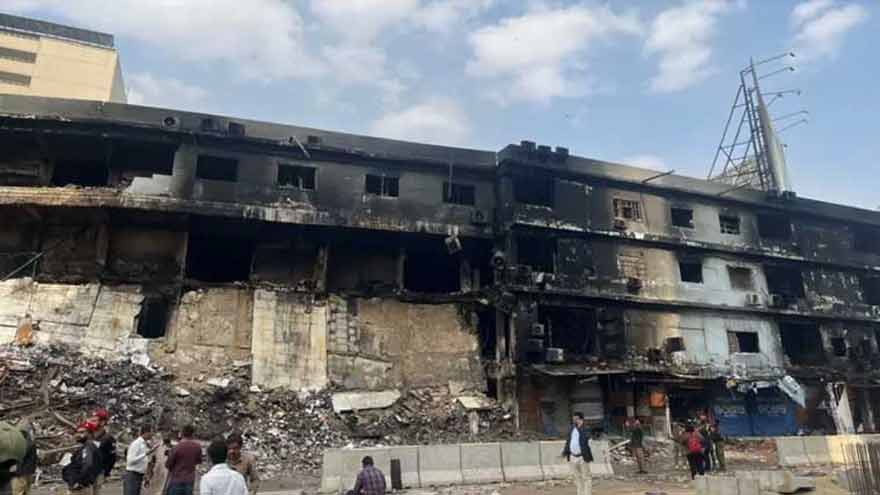
A car bomb exploded Sunday outside government offices in a province west of the Iraqi capital, killing 17 people, officials said. It was the latest deadly hit on a favorite insurgent target. At least 23 people were also wounded in Sunday's blast, according to the police and hospital officials, who spoke on the condition of anonymity. Anbar Deputy Gov Saadoun Obeid said a traffic jam outside the provincial council compound in Ramadi, capital of Anbar province, kept the suicide bomber from reaching the front gate. He said Gov. Qasim al-Fahadawi, who lost an arm in a similar strike a year ago, and other senior Anbar officials weren't in the building during the explosion, which he blamed on al Qaeda. The attack is a hallmark of al Qaeda, and we expect such attacks on government buildings as a natural reaction by this terrorist group to the arrest of most of its senior leaders in Anbar, Mr. Obeid said. They want to take revenge for their latest defeats. Police found a second bomb in a nearby parking lot a few minutes later, but said they detonated it in a safe area. The compound in Ramadi, 115 kilometers west of Baghdad, also houses the Anbar police headquarters and the governor's office. Government officials in Anbar, a former stronghold of al Qaeda militants and Sunni insurgents, have been frequently targeted by insurgents. Last December, the Islamic state of Iraq, an al Qaeda front group, claimed responsibility for an attack on the same compound. That attack caused Anbar governor Qasim al-Fahadawi to lose an arm and undergo leg surgery in the US. And in July, a female suicide bomber blew herself up at a reception room outside Mr. Fahadawi's office. Mr. Fahadawi wasn't there at the time, but the blast coincided with a trip to Iraq by Vice President Joe Biden, undercutting his optimistic predictions of a peaceful transition of power as the nation was beset by political uncertainty. The attacks highlight the persistent efforts by insurgents to undermine security in Iraq as US troops prepare to leave by the end of next year as part of an agreement between Washington and Baghdad.