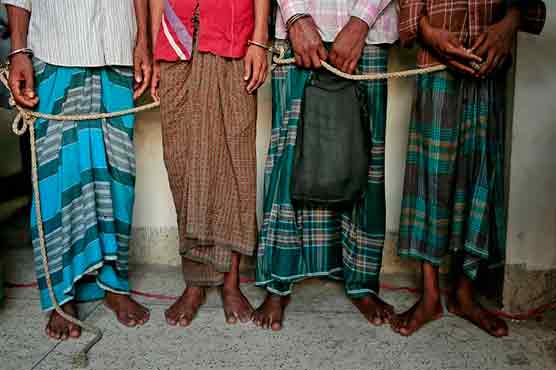
Summary The traffickers spun stories that were unimaginable to their listeners.
UKHIYA (AFP) - The traffickers spun stories that were unimaginable to their listeners, many who hailed from tiny Bangladeshi villages where almost no one earns more than a few dollars a day.
First, there would be the boat: A huge boat where people could spread out comfortably, where the food would be plentiful and delicious. They would be treated with decency while on board and at the end of a week or so they would be quietly dropped off in Malaysia and given high-paying jobs.
After that, they would have plenty of money to send home to their families. There would be enough for food and house payments and school fees for their children. Maybe, if they worked hard enough, there would be enough to build monuments to their success.
“Since my childhood I have dreamed of building a two-story mosque in my area,” said Shafiq Mia, a 23-year-old who spent weeks on one of the traffickers boats.
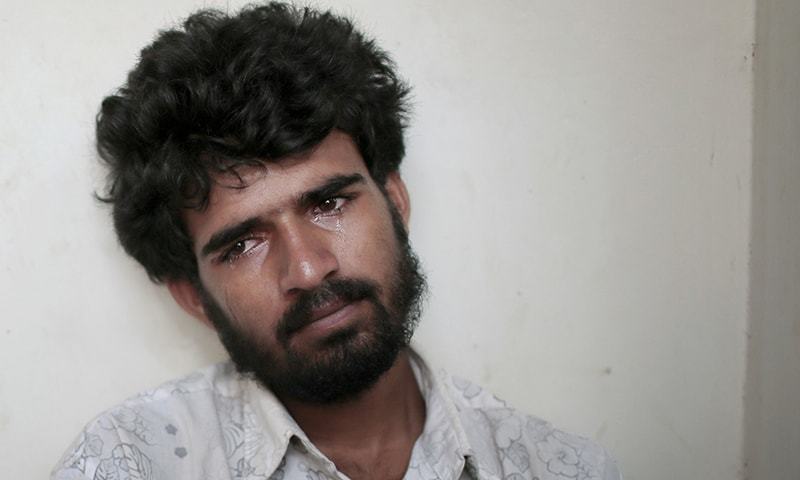
Shafiq Mia
Instead they were taken to fetid ships so crowded they could not lie down without touching someone else. They spent weeks at sea. Some were dropped off to fend for themselves in the jungles of Thailand or in Burmese villages they still cannot name.
Some never reached dry land at all, and found themselves shuttled from one creaky boat to another, bought and sold by traffickers looking to maximize their profits. In the end, most were taken back to Bangladesh, dumped onto beaches from fishing boats, only after their families finally paid ransoms to the traffickers.
As a boat people crisis emerged in Southeast Asia in recent weeks, nearly all the focus has been on the Rohingya: the persecuted Muslim minority fleeing Myanmar.
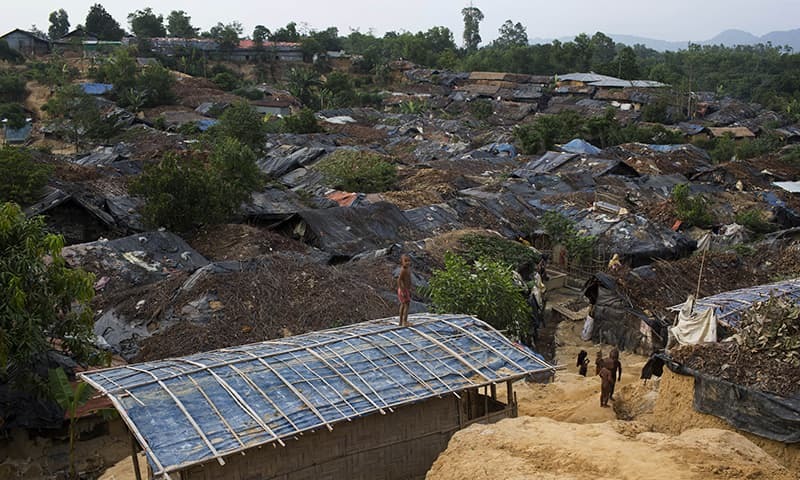
A camp in Ukhiya
But of the more than 3,000 people who have come ashore this month in Indonesia, Malaysia and Thailand, about half were from Bangladesh, according to the United Nations refugee agency, mainly poor labourers seeking better jobs and a brighter future.
Bangladesh is no longer the economic sinkhole it was in the past. The textile industry has given it a huge boost. The economy is growing at more than 6 percent and the UN s development report now ranks Bangladesh with countries like India and Egypt.
But poverty hangs on.
GDP per capita is just over $1,000 a year. Work can be miserable in those textile factories, and many Bangladeshis find themselves only inching up the economic ladder. It s a situation that leaves many people, particularly young people, susceptible to the sales pitches of fast-talking traffickers paid a bonus for every person they lure on board.
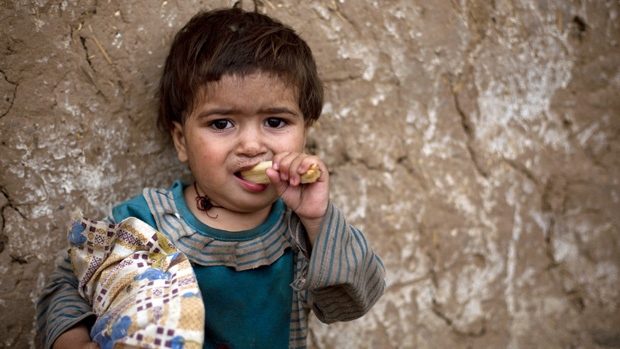
Children read books in their makeshift tent at a camp for Rohingya people
So it was for Mia, who was promised what sounded like a leisurely weeklong cruise to Malaysia and a dreamlike life once he got there. His factory job paid only a meager 7,000 takas ($90) a month.
“They told me I would be on a ship so big I could play cricket. I would be offered good and tasty food during my journey,” he said in a recent interview. “But they did not give us food. They beat us mercilessly. They kicked us whenever we wanted food or even talked to someone else,” he said, his eyes filled with tears and his legs covered in bruises from the beatings he endured.
After two months spent trapped on a boat and in unknown places in Myanmar, a fishing trawler dropped him this week along Bangladesh s coastline. His impoverished parents had paid more than $600 as ransom to free him.
Such ransoms are commonplace, particularly when crackdowns mean traffickers cannot get their human cargo to Malaysia. The victims are sometimes given a mobile phone number connected to a bank account so their families can send money electronically, or a series of murky middlemen shuttle ransom money to traffickers.
The migrants get little sympathy from their government.
Sheikh Hasina, the country s prime minister and the scion of a powerful political family, says the migrants are tainting the image of the country, labelling them “mentally sick."