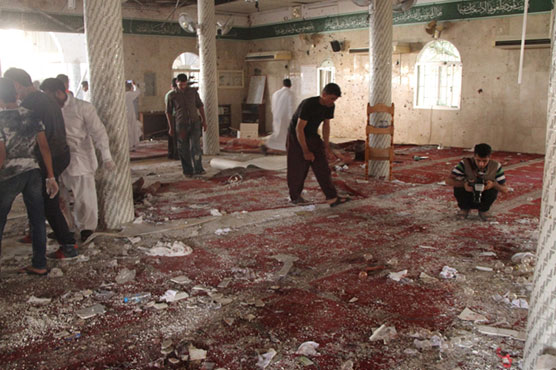
Summary The bomber struck during the main weekly prayers at a mosque in Kudeih.
RIYADH (AFP) - Saudi Arabia on Saturday identified the suicide bomber who killed 21 worshippers at a mosque for the minority community, the deadliest attack in years to strike the kingdom.
"His name was Salih bin Abdulrahman Salih al-Ghishaami, a Saudi national," the interior ministry said in a statement carried by the official Saudi Press Agency.
"He was wanted by security services for belonging to a terrorist cell receiving directions from Daesh abroad," it said, using the Arabic acronym for the Islamic State (IS) group.
On Friday IS said it was behind the murders in Eastern Province, the first time the group has officially claimed an attack in Saudi Arabia.
But it identified the bomber as Abu Amer al-Najdi.
"The cell was discovered last month, and so far 26 of its members, all Saudi nationals, have been arrested," the interior ministry said.
"The criminal investigation lab examined the remains of the terrorist s body and the crime scene, and it was determined that the type of explosives used was RDX," commonly used in military applications.
In its statement, the interior ministry raised the number of wounded from 81 to 101.
The bomber struck during the main weekly prayers at a mosque in Kudeih, in the Shiite-majority city of Qatif.
Children killed
It is the second mass murder of Shiites in the kingdom since late last year, and locals in Qatif took to the streets Saturday to protest against the attack.
In November, attackers which authorities said were linked to IS, killed seven including children in the Eastern Province town of Al-Dalwa. The victims were celebrating Ashura, one of the holiest days of their faith.
Although extremists attacked Westerners and government targets in Saudi Arabia between 2003 and 2007, the Dalwa shootings were the first major militant assault against the muslim minority.
The killings followed the declaration of a "caliphate" in parts of Iraq and Syria by the IS group..
IS has claimed numerous atrocities including the beheading of foreign hostages.
Saudi Arabia and its Gulf neighbours last year joined a US-led military coalition bombing IS in Syria, raising concerns about possible retaliation in the kingdom.
In its statement claiming responsibility for the Qatif attack, IS vowed "dark days ahead" for the muslim minority until militants "chase them from the Arabian Peninsula".
Political and religious leaders in the kingdom, and its media, were unanimous in denouncing the Qatif attack.
It was condemned by the United Nations Security Council and by Saudi Arabia s regional rival Iran.
Most of Saudi Arabia s minority live in the east, where the vast majority of the kingdom s oil reserves lie but where the muslim minorty have long complained of marginalisation.
Since 2011, protests and sporadic attacks on security forces have occurred in minority areas, leaving about 20 youths dead.
The Qatif attack occurred despite the arrest since December of nearly 100 terrorists, mostly linked to IS.
Authorities announced those arrests in late April and said they had foiled several plots to carry out attacks including on the US embassy.
Shopping centres in the kingdom tightened security after the interior ministry warned in April of possible attacks at a mall or oil facilities.