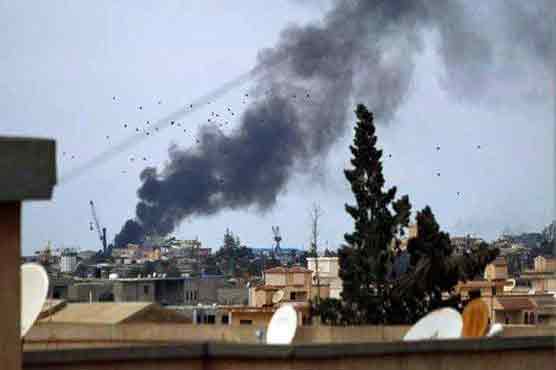
Summary Fierce clashes between militia fighters and IS extremists broke out in Libyan city of Sirte.
BENGHAZI (AP) - Fierce clashes broke out on Wednesday in the central Libyan city of Sirte between militia fighters loyal to authorities in the capital, Tripoli, and extremists from the country s Islamic State affiliate, with at least 23 extremists dead, a militia spokesman said.
The fighting erupted early in the day, with Islamic State extremists launching a multi-pronged attack on the militias, including one known as Brigade 166, spokesman Mohammed Shamia said.
Nearly four years since the ouster of longtime dictator Moammar Gadhafi, Libya is in deep chaos. It is split between an elected parliament and weak government, which were forced to relocate from Tripoli to the far eastern cities of Tobruk and Bayda, and a rival government and parliament set up by Islamist-linked militias in Tripoli.
The turmoil has enabled the rise of Libya s Islamic State branch, which now controls at least two cities along the country s coastline, including Sirte, and a string of smaller towns.
Shamia said that with the help of air strikes, Brigade 166 managed to defeat the extremists on the eastern front of Sirte, killing at least 23 IS fighters, including Algerians and Tunisians, and seizing many weapons from them.
However, a statement purportedly from Libya s IS branch posted photographs on Twitter showing vehicles and weapons the extremists claimed to have seized from the militia. It also said IS had taken over a base near Sirte from Brigade 166.
The fighting in Sirte is part of the IS extremists push to control a key segment of the coastline road linking Sirte to eastern oil terminals.
Last week, IS extremists attacked the town of Hawara, west of Sirte. The town s defenders first repelled the assault but two of their wounded were captured and taken by the extremists the IS stronghold of Nofaliya, where they were beheaded and their bodies put in public display, according Saad Abu-Sharada a Hawara representative in the Tripoli parliament.