Summary The article suggested the unmarried president had disappeared for an ill-timed tryst with her aide
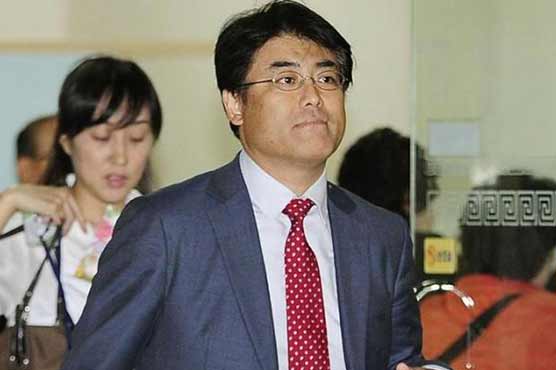
SEOUL (AFP) - South Korea lifted a travel ban Tuesday on a Japanese journalist, who is on trial for allegedly defaming President Park Geun-Hye, allowing him to see his ailing mother at home.
Tatsuya Kato, the former Seoul bureau chief of Japan s conservative Sankei Shimbun newspaper, is on trial over his article regarding Park s whereabouts on the day the Sewol ferry sank a year ago with the loss of more than 300 lives.
The article suggested the unmarried president had disappeared for an ill-timed tryst with her former aide.
The travel ban has been in force since August last year and is scheduled to end this month. The next hearing for the defamation trial is set for April 20.
"The ban was lifted on humanitarian and other grounds," a senior prosecutor told AFP.
"There was a consensus that hearings and debate on contentious issues have been almost completed, and Kato promised to come back after seeing his ailing mother," he added.
Kato has denied criminal libel, which could see him jailed for up to seven years, saying his objective had been to report the public perception of Park in the wake of the Sewol disaster.
South Korean defamation law focuses on whether what was said or written was in the public interest -- rather than whether it was true.
Media freedom group Reporters Without Borders has defended the Sankei journalist, while Japan has formally voiced grave concern over Kato s prosecution and questioned Seoul s commitment to press freedom.
Park s former aide, Jeong Yun-Hoe, testified in court that the Sankei article had presented "groundless slander" as fact rather than rumour.
Jeong had worked as an adviser for Park while she was still a lawmaker, but quit his position in 2007 -- several years before she successfully ran for president.
The Sankei, a robust centre-right daily that has campaigned to reverse an apology from Japan for forcing Korean women into wartime brothels, has suggested it is being singled out by Korean authorities.
The case has aggravated strained relations between Seoul and Tokyo.