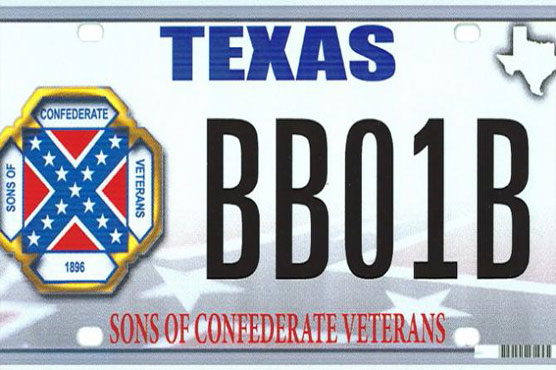
Summary In United States, license plates often act as mini-billboards for a cherished cause or ideal
WASHINGTON (AFP) - Can US motorists put the Confederate flag -- seen by some as a symbol of racist oppression of the slavery-era South -- on their license plates and call it freedom of expression?
The US Supreme Court will decide.
The court heard arguments Monday in a freedom of expression case to determine whether a state or its residents should control the images and slogans printed on state-issued license plates.
In Texas, the Sons of Confederate Veterans filed suit claiming their First Amendment right to free speech had been violated when state officials refused to honor their request for specialty plates featuring the Civil War-era flag.
The Supreme Court took the case after a federal appeals court backed the Sons of Confederate Veterans, saying Texas had discriminated against the group s view that the flag celebrates Southern heritage.
In the United States, license plates often act as mini-billboards for a cherished cause or ideal. Some honor sports teams, universities and other organizations.
The motto "Live Free or Die" is printed on many license plates in New Hampshire, for example. Some plates in Kentucky, meanwhile, display an endorsement of the state s powerful coal industry.
Like most US states, Texas allows motorists who pay an extra fee to buy specialty license plates.
State officials can however reject the request if it determines that the requested message could be offensive to members of the public.
The group argues that Texas has been inconsistent at best in its attitude toward Confederate symbols, often allowing it at government-organized parades and other events celebrating Southern Civil War history.
"The State apparently does not believe that the message of the Confederate flag is offensive to the public," the group said in written arguments sent to the court.
Texas insisted in its pleading to the court that "the speech that appears on state-issued license plates is government speech," and so the government has the right to control what is printed on them.
The Supreme Court was expected to issue its ruling by June.