Summary Stores also began reopening, as people began the task of rebuilding.
Tanna (Vanuatu) (AFP) - Aid was due to reach some of cyclone-hit Vanuatu s worst affected islands Wednesday but others remained isolated, with flights over the Pacific nation showing desperate villagers spelling out the letter "H" for help.
Relief agencies are battling tough conditions and logistical challenges in the sprawling archipelago with a lack of landing strips and deep water ports hampering their efforts to reach distant islands and get a better grip on the full scale of the disaster.
Vanuatu Prime Minister Joe Natuman said "it ll be at least a week or two" before the situation becomes clearer.
The UN Office for the Coordination of Humanitarian Affairs revised its death toll down to 11 from 24 but said it was expected to rise, and aid groups continued to paint a bleak picture, warning of large-scale property destruction and shortages of food and clean water.
The southern islands of Tanna and Erromango bore the full brunt of Severe Cyclone Pam when it barrelled in late Friday, and Oxfam, the UN and CARE Australia said assessments showed widespread devastation with entire villages destroyed.
"In Tanna at Lenakel, the provincial capital, 70 percent of houses are damaged," CARE s Tom Perry told AFP in Vanuatu s capital Port Vila.
The whole township of Waesisi on Tanna s northeast coast was "inundated with water... and 100 percent damaged".
"There re no buildings standing," he said.
Reconnaissance flights by military aircraft from Australia and France "found severe and widespread damage across the larger islands of Tanna, Erromango and Efate," the UN said.
"Less damage was found on the smaller islands in Vanuatu s southern region, which include Anatom, Aniwa and Futuna."
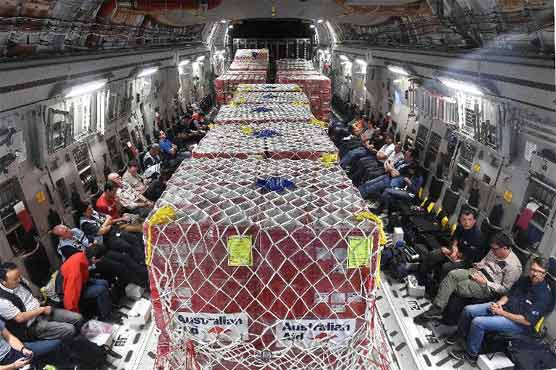
Aid teams reached Tanna, home to 30,000 people, for the first time on Tuesday and more humanitarian workers were flying in to deliver aid. A ferry full of relief supplies was expected Thursday.
The aid, from organisations such as Oxfam and the Australian military, includes basic medical supplies, water and sanitation kits and tarpaulins.
Many of the archipelago s 80 islands remain cut off and Oxfam country director in Port Vila, Colin Collett van Rooyen, said flights over some of them saw people signalling for help.
"The aerial assessments of Ambryn island reported large white Hs marked out on the ground by people signalling for help, and on Tongoa island people holding up mirrors also signalling for help," he said.
Drinking saltwater
While the death toll was revised down, he said real concerns remained about disease with water contaminated, sanitation equipment destroyed and an increasing lack of food.
A BBC team reached the small island of Moso in the northwest and reported that people had resorted to drinking harmful saltwater, with outside help yet to arrive. Drinking saltwater can lead to dehydration and death.
There are no shops on Moso and crops were destroyed, the broadcaster said, adding that many houses were flattened.
Despite the challenging circumstances, many Vanuatuans remain optimistic, living up to their resilient reputation.
"We feel sad. But we (neighbours) always sit together, and that makes me happy," said Lida Chilia, a villager from Mele just outside the capital Port Vila on how she and her friends were coping.
The United Nations said more than 3,370 people were sheltering in some 48 evacuation centres on the main island of Efate.
In Port Vila, access to water and electricity was rapidly being restored and Telecoms Sans Frontieres was working to re-establish telecommunication networks in five provincial disaster management centres, which the UN said was a priority.
Stores also began reopening, as people began the task of rebuilding.
Vanuatu is no stranger to cyclones, which are common in the South Pacific, but locals said Pam felt worse than Cyclone Uma in 1987, which killed 30 people.
"Before, it took one to three months to recover," Riby Esau, 60, told AFP. "It ll be longer now."