Summary Islamic State of Iraq and Levant is being pushed in Sunni heartland, but will it help getting Mosul?
LAHORE: (Web Desk) – In what appears to be a joint venture by all the anti-ISIL militias, coalitions and groups living in Iraq, the militant group is being pushed back in Tikrit and Kirkuk at the same time. While Yazidis have taken on the group in Kirkuk to secure the oil-rich Kurdish areas, the military, along with Shia militia Hashd al-Shaabi and the Sunni tribal warlords, has taken on the Tikrit area.
According to the details, Tikrit is around 180 kilometers away from Baghdad and a heartland of the ISIL. It has remained under the control of the militant organization since June last year and it is the first major attack on the city since it was taken over by the militant organization.
Al-Jazeera reported on Monday that heavy exchange of bombings has been observed in the region between the two forces. Al-Jazeera also reported that the government forces had taken over the center of the town by Sunday where all the important governmental offices are located. However, the ISIL fighters were still reported to be holding their positions in West of the town. It is pertinent to mention here that Al-Dour town of Tikrit is the same one where the former President of Iraq was hiding when he was located by the United States-led coalition forces and then prosecuted.
The region is predominantly Sunni and it is important to note that the ISIL has always been able to hold strong in the Sunni areas. But the recent attack has been boasted off not only as a joint effort by the Sunni and Shia militias against the militant group but also as a major offensive by the government forces without consultation with the US-led coalition. Hailed as a national and home-grown offensive, the Tikrit operation is gaining momentum and may well end up as the first major victory of the Iraqi forces against ISIL.
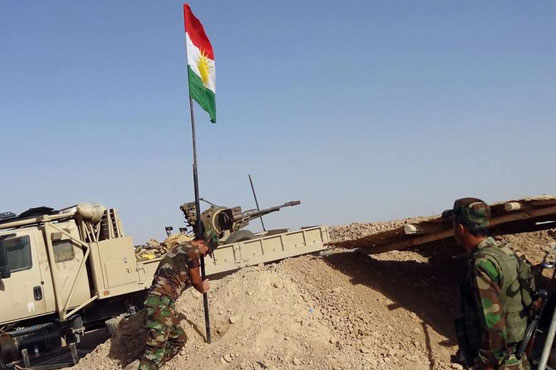
On the other hand, the Kurdish fighters have driven out the ISIL fighters from Kirkuk. According to Reuters, Kurdish fighters retook around 100 square kilometers from the ISIL fighters on Sunday and killed around 100 militants. Kirkuk governor claimed that the offensive will continue and the more advances will be made.
However, there is a dark side of this operation as well. Picture isn’t as rosy as it is being painted by the Iraqi state media. There are certain issues with the operation and without a thorough analysis of this darker side, the matter cannot be understood in detail.
While most of the media in the Middle East is reporting this attack as a joint attack by the Shia and Sunni communities living in Iraq with the help of the state military, the voices of dissent have also been heard and one of them is from none other than the co-author of the book "ISIS: Inside the Army of Terror", Mr. Hassan Hassan. In an article written for The Guardian, Hassan has voiced his fear that the attack can backfire as well.
Hassan has made it clear in his article that while the ISIL is a Sunni militant group, the one fighting it i.e. Hashd al-Shaabi is a Shiite militant group and Human Rights Watch has recorded several violations from this group as well. Being sectarian, Hashd al-Shaabi is nothing but a counter-balancing militia against ISIL and because it is leading the offensive against the ISIL, it may incite the communal Sunni feelings in Iraq. It is important to mention here that the attack has not been spearheaded by the US-led coalition forces in Iraq. Though the US generals and military leaders will be pleased to see the offensive succeeding before they attack the other ISIS stronghold in Mosul, the initiative was not taken by them. It was the Iraqi military along with the Iran-backed Shiite militias that took the lead.
Hassan fears that the attack may backfire if Hashd al-Shaabi fails to contain its fighters after retaking the towns because Hashd has a track record of sectarian violence. At the same time, many Shiite militias have already declared it as a revenge for Camp Speicher massacre last summer. Although Hashd al-Shaabi has repeatedly said that it will not harm the Sunni residents living in these areas, if it does, it may well unite the Sunni militias under ISIL umbrella as they would then understand the situation in a fashion that would convince them of alternative being just as bad.
Iraqi forces have initiated the attack and there is no looking back of course because the world wants them to win against the deadly terrorist organization yet the effort has to be well-coordinated and mutually owned. Otherwise the threat of ISIS will continue to loom and the violence in case of an expected victory in Tikrit may lead to more sympathy for ISIS as well.