Summary Member nations to monitor extremist social media and keep more personal data on suspicious travel.
BRUSSELS (AP) - In a bid to keep European Union citizens from going to fight in Syria, the bloc s anti-terror chief said Wednesday he wants member nations to be more aggressive in vetting extremist social media and keep more personal data on suspicious travel.
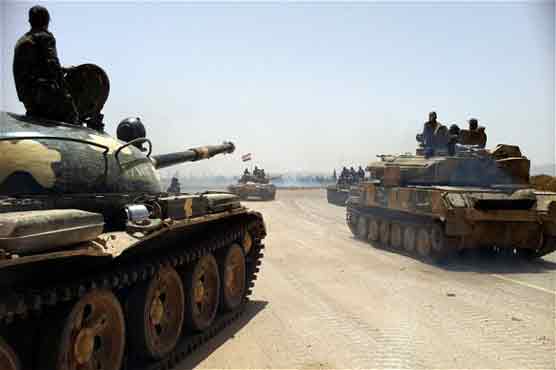
Gilles de Kerchove said the issues will be picked up by EU interior ministers in Luxembourg on Friday as they seek to contain the scale of foreign fighters leaving EU nations to take up arms with extremist opposition groups facing the regime of President Bashar Assad.
There are fears in many EU nations that citizens who leave to fight with extremist groups, sometimes with links to al-Qaida, might return home radicalized, with new knowledge and training, and the intent to set off a terror attack.
De Kerchove said the problem of such foreign fighters was even bigger now than during the war in Afghanistan over the past decade.
"We never had the sort of travel of jihadists on that scale," he said in a video address.
Exact figures are hard to come by since people leave on their own initiative or in small groups. They can do so inconspicuously, since travel to Syria, often through Turkey by plane or bus, is easy.
EU estimates have hovered between 500 and 700. "They will get training, trained to fight. Probably they will be exposed to radical ideas," de Kerchove said, raising fears they could set up an attack when they get back.
Terror fears have increased recently after a British soldier was slain on a London street in broad daylight and a French soldier was stabbed while patrolling a crowded area just outside Paris, even though none of the two were linked to returning Syria fighters.
To get a better grip on the problem, de Kerchove wants more aggressive surveillance of social media like YouTube, Facebook and Twitter, "because we know that is where this sort of recruitment process does happen."
In other measures, he wants all EU nations to have specific legislation dealing with such travel.
Anti-terror measures are still largely the domain of the individual EU nations and de Kerchove is hoping mainly that Friday s meeting will show a greater willingness to cooperate and set out joint objectives.
He is specifically interested in approaching Turkey to look more closely at suspicious travel of EU citizens, including the collecting of more travel data. It is a sensitive issue since it also touches on privacy concerns of EU citizens.