Summary Soldier charged with killing 16 villagers in Afghanistan will plead guilty to avoid death penalty.
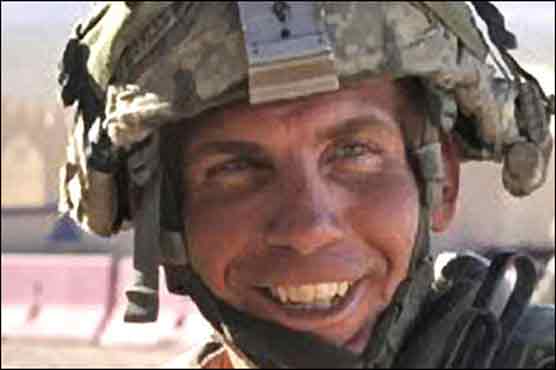
SEATTLE (AP) - The US Army staff sergeant charged with killing 16 villagers in one of the worst atrocities of the Afghanistan war will plead guilty to avoid the death penalty in a deal that requires him to recount the horrific attack for the first time, his attorney told The Associated Press.
Robert Bales was "crazed" and "broken" when he slipped away from his southern Afghanistan outpost in March 2012 and attacked mud-walled compounds in two sleeping villages nearby, lawyer John Henry Browne said Wednesday. But his client s mental state didn t rise to the level of a legal insanity defense, Browne said.
The Army had been trying to have Bales executed, and Afghan villagers have demanded it. In interviews with the AP last month, relatives of the victims became outraged at the notion Bales might escape the death penalty.
"For this one thing, we would kill 100 American soldiers," vowed Mohammed Wazir, who had 11 family members killed that night, including his mother and 2-year-old daughter. Most of the victims were women and children, and some of the bodies were piled and burned.
The killings drew such angry protests that the US temporarily halted combat operations in Afghanistan. It was three weeks before US investigators could reach the crime scenes.
In Afghanistan on Thursday, a family member of a victim reacted angrily to the news that Bales might escape the death penalty.
"This is a shameful act by the Americans. They promised us the death penalty, and now they are going back on their word," said Baraan Noorzia, whose brother was killed in the massacre.
His comment echoed the reaction by other relatives last month in interviews with The Associated Press in Kandahar.
"For this one thing, we would kill 100 American soldiers," vowed Mohammed Wazir, who had 11 family members killed that night, including his mother and 2-year-old daughter.
"A prison sentence doesn t mean anything," said Said Jan, whose wife and three other relatives died. "I know we have no power now. But I will become stronger, and if he does not hang, I will have my revenge."
Any plea deal must be approved by the judge as well as the commanding general at the US base where Bales is being held. A plea hearing is set for June 5, said Lt. Col. Gary Dangerfield, an Army spokesman. He said he could not immediately provide other details.
"The judge will be asking questions of Sgt. Bales about what he did, what he remembers and his state of mind," said Browne, who told the AP the commanding general has already approved the deal. A sentencing-phase trial is set for September.
Browne previously indicated Bales remembered little from the night of the massacre. But as further details and records emerged, Bales began to remember what he did, the lawyer said, and he will admit to "very specific facts" about the shootings.
Browne would not elaborate on what his client will tell the judge.
Bales had been drinking contraband alcohol and snorting Valium that was provided to him by another soldier and had been taking steroids before the attack.
Testimony at a hearing last year established that Bales returned to his base between attacking the two villages, woke up a fellow soldier and confessed. The soldier didn t believe him and went back to sleep, and Bales left again to continue the slaughter.
Browne said his client, who was on his fourth combat deployment, was suffering from post-traumatic stress disorder and a traumatic brain injury. He continued to blame the Army for sending him back to war in the first place.
"He s broken, and we broke him," Browne said.
The massacre raised questions about the toll multiple deployments were taking on U.S. troops. For that reason, many legal experts believed it that it was unlikely that he would receive the death penalty. The military justice system hasn t executed anyone since 1961.
The defense team, including military lawyers assigned to Bales, eventually determined after having him examined by psychiatrists that he would not be able to prove any claim of insanity or diminished capacity at the time of the attack, Browne said.
Browne acknowledged the plea deal could inflame tensions in Afghanistan and said he was disappointed the case has not done more to focus public opinion on the war.
"It s a very delicate situation. I am concerned there could be a backlash," he said. "My personal goal is to save Bob from the death penalty. Getting the public to pay more attention to the war is secondary to what I have to do."