Summary China is multiplying its influence in order to play a decisive role in world politics.
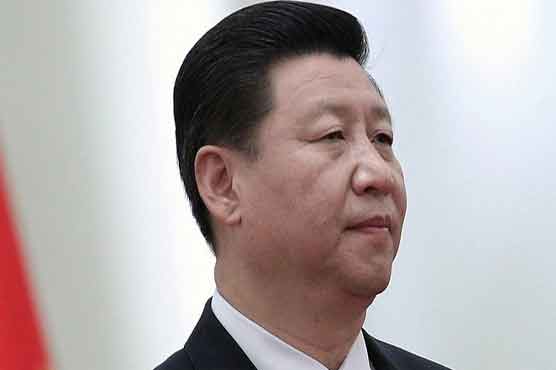
BEIJING (AFP) - Chinese President Xi Jinping heads Friday to Latin America and the Caribbean, as he looks to keep on building links with the kind of emerging economies Beijing has cultivated in its rise to global influence.
Xi s visit to Trinidad and Tobago, Costa Rica and Mexico follows his first foreign trip to Russia and three countries in Africa -- Tanzania, South Africa and Congo-Brazzaville -- shortly after taking office in March.
China has embarked on a diplomatic drive since completing its once-in-a-decade power handover, with Xi s number two Premier Li Keqiang also visiting India, Pakistan, Switzerland and Germany, and several high-level visitors to Beijing.
After visiting Mexico, Xi travels to the United States for his first summit with President Barack Obama on June 7-8 in California.
China has in recent years aggressively pushed trade and investment ties with the developing world, particularly Africa and Latin America, to secure raw materials to fuel its economic growth and wield greater geopolitical influence in relation to the United States.
"While the US gets into China s backyard, China does the same to the US," Ding Gang, a senior editor with the People s Daily newspaper, wrote Thursday in the Global Times, which is affiliated with the Communist Party mouthpiece.
Ding cited a recent trip to Washington by Myanmar President Thein Sein, when the US and the former pariah state -- long embraced by China -- signed a trade and investment framework agreement.
China s assistant foreign minister Zhang Kunsheng cast Xi s journey in more diplomatic tones, telling reporters it "will be of great significance for deepening China s relations with these three countries and promoting overall cooperation between China, Latin America and the Caribbean".
The visit to Mexico, Latin America s second-largest economy after Brazil and a party to the gigantic North American Free Trade Agreement, is the first by a Chinese president since 2005.
China is Mexico s second-largest trading partner, Zhang said, while Mexico is China s second-largest in Latin America. Two-way trade hit $36.7 billion in 2012, he added, a 10 percent increase from the year before.
Both countries are members of the Group of 20 leading economies, but Matt Ferchen, of the Carnegie-Tsinghua Center for Global Policy in Beijing, pointed out they compete against each other to sell exports to the US.
Xi s choice of destinations was "quite an interesting set of countries", he said.
As well as improving ties with Mexico, "China has the possibility of trying to create a different pattern of relations" with other Latin American countries, based on more than commodity exports one way and manufactured goods the other, he added.
Costa Rica is the first, and so far only, country in Central America to switch diplomatic recognition from Taiwan to China, which it did in 2007.
The two countries concluded a free trade agreement in 2010 and business has since boomed, with two-way trade up 30.5 percent in 2012 to $6.2 billion.
"There s a sort of experiment and there s a desire on the Chinese side to create a kind of relationship that might set a pattern for other countries in Central America and the Caribbean," Ferchen said.
Trade between China and Trinidad and Tobago, however, remains small and is declining, totalling $450 million in 2012 according to Chinese government statistics, down from $627 million the year before.
Xi s visit is the first there by a Chinese president, as well as to the English-speaking Caribbean region, according to Zhang. It comes days after a visit by US Vice President Joe Biden.
The island nation has large reserves of oil and gas and one of the highest levels of GDP per capita in the western hemisphere, the International Monetary Fund said in March.
As part of China s outreach to other countries, Xi will use the stop to meet representatives of several more nations, including Antigua and Barbuda, the Bahamas, Dominica, Grenada, Guyana, Suriname and Jamaica, Zhang said.
Venezuela reacts against Colombia over conspiracies
Venezuela is livid with neighboring Colombia because its president met with a Venezuelan opposition leader who claims Hugo Chavez s successor lacks legitimacy as president.
CARACAS, May 30, 2013 (AFP) - Venezuela is livid with neighboring Colombia because its president met with a Venezuelan opposition leader who claims Hugo Chavez s successor lacks legitimacy as president.
Venezuela is even threatening to stop acting as a facilitator of Colombian peace talks that have been under way since November in Havana in a bid to end Latin America s oldest insurgency, waged by the leftist FARC rebel army.
It all started Wednesday when Colombian President Juan Manuel Santos met with Henrique Capriles, the conservative defeated in Venezuela s April presidential election by Chavez s political heir Nicolas Maduro.
Capriles has refused to acknowledge defeat, saying the close-call election was stolen by the Maduro camp, and his visit to Bogota was aimed at seeking support for his drive for an audit of the results. Officially, he lost by 1.49 percentage points.
In reprisal for that meeting Maduro has asked Venezuela s delegate to the Colombian peace talks to return to Caracas to assess the situation, Foreign Minister Elias Jaua said.
"It is very difficult to work toward peace for a brother nation when the major institutions of that nation are provoking and stimulating the destabilization of Venezuela," he added.
Jaua said bilateral relations had been "derailed."
His Colombian counterpart Maria Angela Holguin said she did not want to debate the issue through the media. "We will deal with this issue directly with the Venezuelan government," she said.
Venezuela and Chile are serving as friends of the Colombian peace process, while the actual guarantors are Cuba and Norway.
In a first achievement in talks under way since November the two sides announced a deal Sunday to provide landless peasants with land, as part of a far reaching rural reform package.
The talks are in recess now and resume June 11 in Havana.