Summary Russian officials criticized the EU decision to allow their arms embargo against Syria to expire.
BRUSSELS (AP) - Fears grew of a foreign-fed arms race in Syria on Tuesday as European Union countries decided they could provide weapons to the rebels and Russia disclosed that it has signed a contract to provide Syria with sophisticated anti-aircraft missiles.
Either development would significantly raise the firepower in the two-year civil war has already killed more than 70,000 people and sent hundreds of thousands fleeing the country, just as the key countries prepare for a major peace conference in Geneva that had been described as the best chance yet to end the bloodshed.
Russian officials criticized the EU decision Monday night to allow their arms embargo against Syria to expire, freeing its member countries to provide weapons for the outgunned rebels. Russia, which has been a strong supporter of the Syrian government, said the British- and French-driven decision undermined peace efforts.
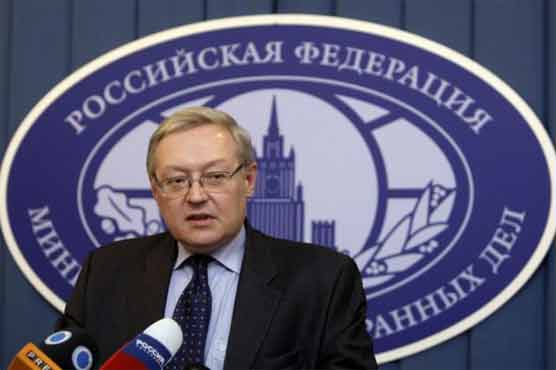
Deputy Foreign Minister Sergei Ryabkov said Tuesday that Russia has signed a contract with the government of Syrian President Bashar Assad to provide it with state-of-the-art S-300 air defense missiles, which he said were important to prevent foreign intervention in the country. Ryabkov would not say whether Russia has shipped any of the missiles to Syria yet.
Ryabkov said Russia understands the concerns about providing such weapons to Syria, but believes that may "help restrain some hot-heads considering a scenario to give an international dimension to this conflict."
EU diplomats have said Britain and France are considering providing equipment to the rebels, and Syrian neighbors Turkey and Lebanon risk being drawn into the conflict.
Ryabkov called the EU move to end its arms embargo "a manifestation of double standards" that will hurt the prospects for the Geneva talks, which are expected to happen in June.
Meanwhile, Israel has warned that it will come up with appropriate response if Russia supplies missiles to Syria.
Israel "will know what to do" if Russia delivers anti-aircraft missiles to Syria, its defence minister said Tuesday, in an apparent allusion to another air strike on the war-torn neighbouring country.
"The deliveries have not taken place, and I hope they do not. But if, by misfortune, they arrive in Syria, we will know what to do," Moshe Yaalon said.
His comments came after Russian Deputy Foreign Minister Sergei Ryabkov said providing the missiles to the regime of President Bashar al-Assad would be a "stabilising factor" aimed at deterring any foreign intervention in Syria.
Speaking in Moscow, Ryabkov said "we consider these supplies a stabilising factor and believe such steps will deter some hotheads from considering scenarios that would turn the conflict international with the involvement of outside forces."
Earlier this month, Israel launched air raids inside Syria targeting what sources said were arms destined for its arch foe, Lebanese militant group Hezbollah, whose fighters have entered the conflict alongside the Syrian army.
The strikes ramped up regional tension, with Syria threatening to hit back.
Israel and Russia s opposing standpoints over Syria surfaced shortly afterwards, with the Jewish state criticising Russian arms deals with Assad, and Moscow appearing to warn against further Israeli strikes.