Summary A government-commissioned study has found, underlining the scale of the city's housing crisis.
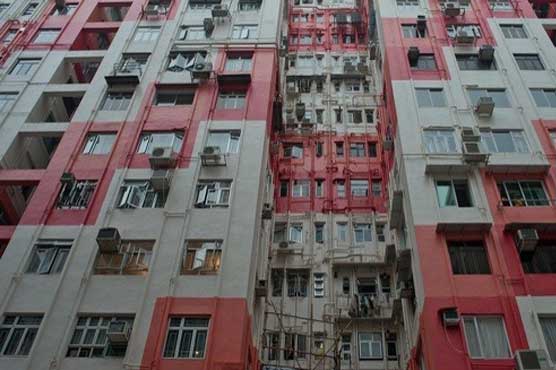
HONG KONG (AFP) - More than 170,000 people in Hong Kong are living in cramped subdivided flats, a government-commissioned study has found, underlining the scale of the city s housing crisis.
Tens of thousands of low-income families and immigrants are forced to live in the tiny subdivided units, unable to afford sky-high rents in the crowded city of seven million.
Hong Kong s Beijing-backed leader Leung Chun-ying has promised to make tackling the housing problem a "top priority" by boosting the number of new homes for Hong Kong people.
But the study showed the problem is even greater than previously thought, with an estimated 171,300 people living in 66,900 subdivided flats.
"About 30,600 such units do not have essential facilities such as kitchen facilities, independent toilet and water supply," Secretary for Transport and Housing Anthony Cheung told reporters late Monday.
The study was carried out from January to April by Policy21, a survey organisation comprising academics from the University of Hong Kong.
The Census and Statistics Department last October estimated 64,900 people live in subdivided flats, cubicles, caged bed spaces and cocklofts, which are usually around 40 square feet (3.72 square metres).
The smallest of these cubicles cost less than HK$200 ($26) a month. But poor workmanship and lax standards in subdivided apartments often create structural dangers, hygiene problems and fire hazards.
In 2011 a fire which started in a street market killed nine people from a nearby tenement after they became trapped as they tried to escape cubicle-style flats through a maze of narrow hallways.
Many of the victims died of suspected smoke inhalation in a stairwell that appeared to have been blocked.
The Asian financial centre has some of the highest property prices in the world, driven by limited supply and speculation from wealthy mainland Chinese investors.
The government has raised real-estate purchasing and resale costs for non-local buyers in an attempt to cool the overheating market.
- one at the Gori nuclear complex and another at the Wolseong plant -- after learning that both had used parts supplied with forged warranties.
The scheduled resumption of another reactor under maintenance at Gori, and the start of a new reactor at Wolseong were postponed for the same reason, the commission said.
Parts used at all four reactors would have to be replaced, it added.
All parts supplied for use in South Korean reactors require quality and safety warranties from one of 12 international organisations designated by Seoul.
Last year, officials said eight suppliers were found to have faked warranties covering thousands of items used in a number of reactors and, earlier this month, six nuclear engineers and suppliers were jailed for their part in the scandal.
Although the suspect parts were "non-core" components that presented no public safety risk, the authorities instigated an inspection of all reactors nationwide.
Tuesday s ministry statement said further criminal and civil lawsuits would be filed against any organisation or individual found responsible for forging documents.
"Criminal investigation will also be requested for wrongdoing by suppliers, testing agencies and organisations in charge of verification," including the state-run Korea Hydro & Nuclear Power Co., it added.
South Korea s nuclear sector has been dogged by a series of malfunctions, forced shutdowns and corruption scandals that have undermined public confidence already shaken by the 2011 Fukushima nuclear disaster in Japan.
In May last year, five senior officials of the state-run Korea Hydro Nuclear Power Co. were charged with trying to cover up a potentially dangerous power failure at the country s oldest Gori-1 reactor.
Despite increasing public concern, the government has vowed to push ahead with its nuclear power programme, and plans to build an additional 16 reactors by 2030.