Updated on
Summary The White House had hoped to lay the groundwork for peace talks by sending five Taliban prisoners.
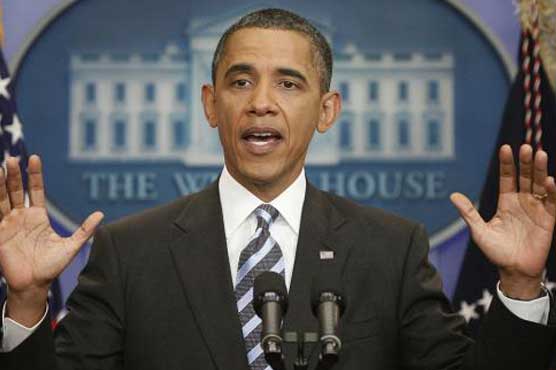
President Barack Obamas administration, seeking to revive stalled Afghan peace talks, may alter plans to transfer Taliban detainees from Guantanamo Bay prison after its initial proposal fell foul of political opponents at home and the insurgents themselves.As foreign forces prepare to exit Afghanistan, the White House had hoped to lay the groundwork for peace talks by sending five Taliban prisoners, some seen as among the most threatening detainees at Guantanamo, to Qatar to rejoin other Taliban members opening a political office there.In return, the Taliban would make its own good-faith gestures, denouncing terrorism and supporting the hoped-for talks with the government of Afghan President Hamid Karzai.While that plan has not been scotched entirely, several sources familiar with preliminary discussions within the U.S. government said the United States may instead, as an initial gesture meant to revive diplomacy, send one of those detainees directly to Afghan government custody.The sources identified the detainee as a former Taliban regional governor named Khairullah Khairkhwa, who is seen by American officials as less dangerous than other senior Taliban detainees now held at the U.S. military prison in Cuba.No final decision appears to have been made on Khairkhwas fate.A senior Obama administration official, while not disputing that Khairkhwas unilateral transfer had been suggested, cautioned that it was still at a brainstorming level. The onus was still on the Taliban to show it is interested in Afghan reconciliation, he said.Its most definitely not policy, said the senior official, speaking on condition of anonymity. At the moment weve made clear what we expect from reconciliation ... and the Taliban understand that, full stop.More than a year ago, the White House launched what began as a secretive diplomatic bid to coax the Taliban, the Islamist group that ruled Afghanistan until 2001, into peace talks. That campaign has become central to U.S. strategy as officials conclude the Afghan war will not end on the battlefield alone.It remains far from clear whether the Taliban would embrace sharing power in Afghanistan and whether the militants are cohesive enough to agree on a joint diplomatic approach.But Washingtons strategy, before a May summit of NATO leaders in Chicago, is to build on what officials see as military progress against the Taliban, and encouraging signs from the Afghan and Pakistani governments, to heap pressure on the Islamist group.As we head into Chicago obviously well continue to highlight each of those (areas) and well continue to work with Congress, the U.S. official said.The Chicago summit is expected to further detail plans for the withdrawal of most of NATOs 130,000 troops there by the end of 2014 and set the course for future ties between Afghanistan and the West.A LONG SHOT, BUT FEW ALTERNATIVESU.S. efforts to broker the talks were dealt a blow last month when the Taliban suspended its participation and appeared to reject even minimal restrictions for prisoners transferred to Qatar.From the beginning, a transfer of Taliban prisoners has posed major political risks for Obama in an election year.U.S. lawmakers from both parties, but particularly Republicans, have warned that prisoners such as Mullah Mohammed Fazl, a high-risk detainee and former Taliban military commander alleged to be responsible for the killing of thousands of minority Shiite Muslims, might rejoin militant operations.The transfer proposal has also been divisive within the Obama administration. Because Defense Secretary Leon Panetta, under U.S. law, must personally approve the transfer, Pentagon officials worry their agency will be deemed responsible for any future actions by those detainees.Partly for those reasons, U.S. negotiators are now focusing on Khairkhwa. Once the Talibans governor of western Herat province, he was also a Taliban spokesman and interior minister.