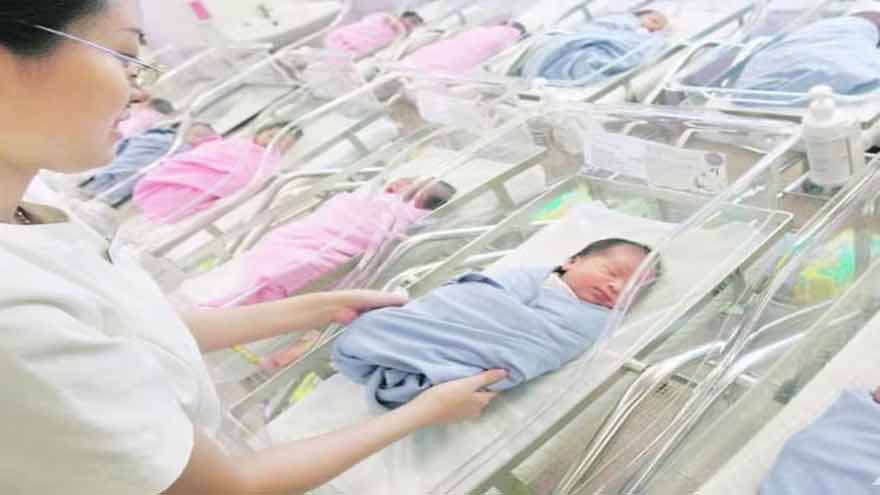
Summary The country recorded fewer than 30,000 births in 2025 for the first time since gaining independence, while its total fertility rate fell to a record-low 0.87 births per woman.
SINGAPORE (Web Desk) - Singapore is expanding its landmark baby bonus program as the city-state confronts a deepening demographic crisis, with births and fertility rates falling to historic lows despite years of government incentives encouraging families to have children.
The country recorded fewer than 30,000 births in 2025 for the first time since gaining independence, while its total fertility rate fell to a record-low 0.87 births per woman.
The decline is raising concerns about Singapore’s future workforce and the growing economic burden of an aging population.
“Boosting the fertility rate is crucial to slow down the rate of change and allow society to adjust economically as well as institutionally,” said Tan Poh Lin, a senior research fellow at the National University of Singapore’s Institute of Policy Studies.
Tan said Singapore faces particular challenges because of its limited land and natural resources, making it difficult to finance the rising costs of healthcare and other support for an aging population. Immigration can help address labor shortages, he said, but is unlikely to fully resolve the demographic challenge.
New package offers broader support
Prime Minister Lawrence Wong unveiled the new SG Child Support Package during the National Day Rally on Aug. 23, promising broader assistance for families throughout a child’s upbringing.
The package includes expanded childcare leave, increased financial assistance, more affordable caregiving options and additional opportunities for subsidized housing.
Taken together, the benefits could provide families with support worth nearly 70,000 Singapore dollars, or about $55,000, by the time a child reaches age 17.
Demographers say the new approach could be more effective than previous policies because it spreads support over a longer period rather than concentrating assistance around the time of a child’s birth.
“Singapore’s family policies had become increasingly complicated,” said Bussarawan Teerawichitchainan, a social demographer and sociologist at the National University of Singapore. She said the new system ties support more clearly to individual children and provides assistance throughout childhood.
However, experts remain cautious about whether the measures will significantly change Singaporeans’ decisions about having children.
Singapore has repeatedly increased financial incentives for marriage and parenthood, yet fertility has continued to decline.
Teerawichitchainan said parents’ concerns increasingly extend beyond financial costs to include a lack of time, workplace pressures, childcare responsibilities, housing and the broader demands of raising children.
Aging population poses economic challenge
Singapore’s shrinking younger population could have significant consequences for the economy as fewer people enter the workforce while the number of older residents continues to increase.
“Smaller younger cohorts enter the workforce while the older population continues to grow,” said Chua Yeow Hwee, an economist at Singapore’s Nanyang Technological University. He said the trend could place increasing pressure on the labor supply and tax base.
Businesses could also face greater difficulties finding workers as the population ages and the domestic workforce shrinks, Chua said.
Singapore has increasingly relied on foreign workers to compensate for its declining pool of local workers. The country had nearly 1.6 million foreign workers in 2025, representing about 40% of its total labor force, according to the Migration Policy Institute.
That dependence highlights the challenge facing Singapore: while immigration can help sustain economic growth and fill labor shortages, policymakers also want to slow the decline in the country’s fertility rate.
The expanded baby bonus scheme therefore represents a broader attempt to make parenthood more manageable. But whether financial support, childcare assistance, housing benefits and workplace flexibility will be enough to persuade more Singaporeans to have children remains uncertain.
For now, the record-low fertility rate suggests that reversing the demographic trend will require more than simply increasing the amount of money offered to parents.