Summary Rare stone discovered outlining ancient Rome's city limits
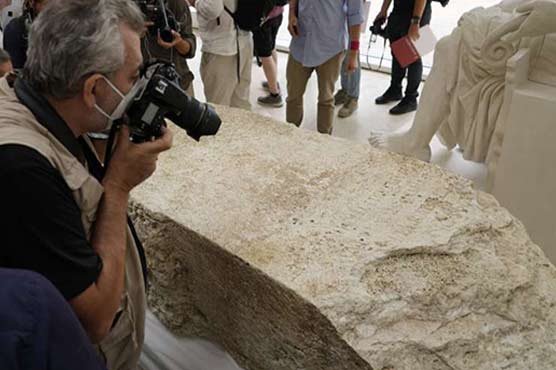
ROME (AP) — Archaeologists have discovered a rare stone delineating the city limits of ancient Rome that dates from the age of Emperor Claudius in 49 A.D. and was found during excavations for a new sewage system.
Rome Mayor Virginia Raggi was on hand for the unveiling Friday of the pomerial stone, a huge slab of travertine that was used as a sacred, military and political perimeter marking the edge of the city proper with Rome’s outer territory.
It was found June 17 during excavations for a rerouted sewer under the recently restored mausoleum of Emperor Augustus, right off the central Via del Corso in Rome’s historic center.
In ancient Rome, the area of the pomerium was a consecrated piece of land along the city walls, where it was forbidden to farm, live or build and through which it was forbidden to enter with weapons.
At a press conference in the Ara Pacis museum near the mausoleum, Claudio Parisi Presicce, director of the Archaeological Museums of Rome, said the stone had both civic and symbolic meaning.