Updated on
Summary A university lecturer injured in the 7/7 bombings faces being expelled from the UK.
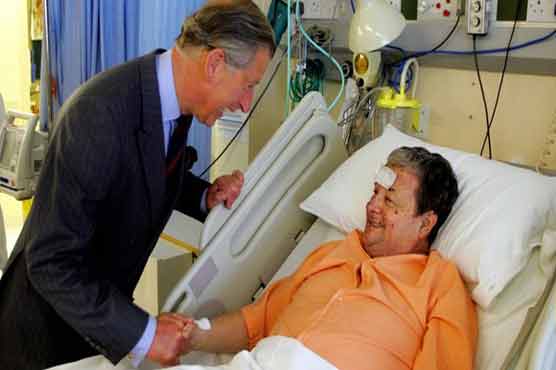
In the frightening days after 7/7, John Tulloch was the face of Britain’s resistance to terror: bloodied, dazed, clothes in shreds, his picture appeared on newspaper front pages around the world.Sitting opposite a suicide bomber on a Circle Line train, he had been saved from death by his own luggage. He was visited in hospital by the Prince of Wales, who proclaimed him an example of the “resilience of the British people”.Prof Tulloch, 70, who traces his ancestry here back to the 14th century, was born to British parents in a British colony. He has a British wife, children and brother.He was raised and educated in Britain from the age of three, has substantial assets and property here and has lived or worked in the UK for most of his life, holding a series of posts at British universities. He even held a British passport.But now, his passport has been confiscated and he faces expulsion from Britain in the latest bizarre twist in this country’s “Kafkaesque” immigration laws.“I am totally gobsmacked by this,” said Prof Tulloch. “I’ve got a huge attachment to Britain. My family has served Britain for three generations. I’ve been banging my head against a wall trying to get this sorted out, but I’ve never before encountered so much frustration. It’s like Kafka.”Prof Tulloch, who still suffers post-traumatic stress disorder, said the problems with his citizenship had worsened the “sense of uncertainty he had suffered since the bombing.“7/7 is not hard to go back to,” he said. “I can talk about that. What’s hard to go back to is that I am about to be thrown out of the country.“There I was, hailed as an example of British courage, British pluck and the British spirit, an iconic image of British resistance. I get blown up in the media as a British patriot, then I get kicked out.”What makes Prof Tulloch’s plight so hurtful to him is that it is a direct consequence of his family’s very service to this country.He was born to a British Army officer in pre-independence India. Unknown to him, this conferred a lesser form of British nationality known as a “British subject without citizenship”.He was, he says, never told about this status and was issued with a British passport in the normal way.“Neither I nor my parents ever received information from the Government that this was somehow an inferior passport,” he said. “In particular, the passport itself explicitly said that you could take out dual nationality without risking your British nationality.”After a degree at Cambridge, postgraduate study at Sussex and a career in UK academia, Prof Tulloch took a job in Australia and was granted Australian citizenship.Unlike with a full British citizen, and again unknown to him, this automatically cancelled both his British nationality and his right to live in Britain. When he applied to renew his British passport, it was confiscated.He was able to return to the UK, where he has held a professorship of communications at Brunel