Updated on
Summary Argentina courts have 17 cases of mass killings, kidnapping against ex-dictators.
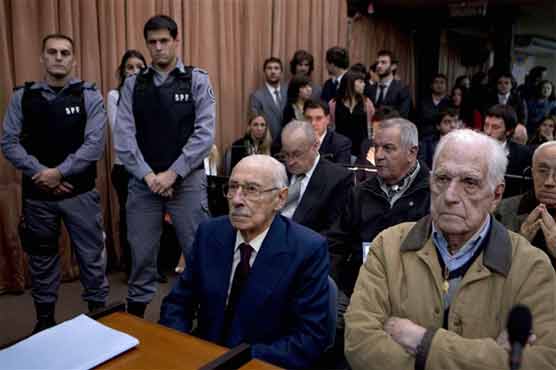
Conviction of two former dictators for the systematic stealing of babies from political prisoners 30 years ago is a big step in Argentinas effort to punish that eras human rights abuses, though certainly not the last.Following Thursdays convictions of Rafael Videla and Reynaldo Bignone, at least 17 other major cases are before judges or are nearing trial.Among them is a mega-trial involving the Navy Mechanics School, which became a feared torture center as the 1976-1983 military junta kidnapped and killed 13,000 opponents while trying to annihilate an armed leftist uprising. That case involves 65 defendants, nearly 900 victims, more than 100 witnesses and about 60,000 pages of evidence.A Never Again commission formed shortly after Argentinas democracy was restored in 1983 documented thousands of crimes against humanity during the military regime, but hardly any of the violators were prosecuted until the late Nestor Kirchner was elected president 20 years later.Justice Minister Julio Alak said Thursday that Kirchners wife and successor, President Cristina Fernandez, deserves credit for making the human rights cases a cornerstone of government.Its unthinkable that in a state of law, the murderers of the people could be in any place but prison, Alak said after the verdicts were read.Videla, 86, was sentenced to 50 years in prison, while the 84-year-old Bignone got 15 years for their roles in the baby thefts. The prison time is symbolic, though, because both men have been behind bars for years following multiple convictions and life sentences for other crimes against humanity.Seven of their co-defendants were also convicted on charges involving the theft of 34 babies, while two people were acquitted by a three-judge panel.Despite the jailing of Videla and Bignone, most people who have been convicted of rights violations during the dictatorship remain free on appeal, and many others have yet to stand trial.According to a March tally by Argentinas independent Center for Legal and Social Studies, a total of 1,861 defendants have been named in cases of state terror, but verdicts were reached for only 17 percent of them - with 92 percent of them found guilty. Since the trials began in 2006, at least 65 have resulted in sentences, but only seven of these have exhausted an appeals process that takes more than two years on average.Still, Thursdays verdicts were a cause for celebration outside the federal courthouse in Buenos Aires, where activists watched them being announced on a huge television screen.This is an historic day. Today legal justice has been made real - never again the justice of ones own hands, which the repressors were known for, prominent rights activist Tati Almeida said.The baby thefts set Argentinas military regime apart from all the other juntas that ruled in Latin America at the time. Videla and other military and police officials were determined to remove any trace of the armed leftist guerrilla movement they said threatened the countrys future.Many pregnant women detained as dissidents were disappeared shortly after giving birth in clandestine maternity wards, and their babies were handed over to families trusted by military officials.In his testimony, Videla denied there was any systematic program for stealing babies, and accused prisoners of using their unborn children as human shields in their fight against the state.He called himself a political prisoner, labeled the trial a farce and characterized his sentence as revenge by people who after being defeated militarily now occupy positions in the government. Despite this, Videla said, he would accept his sentence in protest, as an act of service, and with a clear conscience.Witnesses during the trial included former U.S. diplomat Elliot Abrams. He was called to testify after a long-classified memo describing his secret meeting with Argentinas ambassador was made public at the request of the Grandmothers of the Plaza de Mayo, a human rights group whose evidence-gathering efforts were key to the prosecution.Abrams testified from Washington that he secretly urged that Bignone reveal the stolen babies identities as a way to smooth Argentinas return to democracy.We knew that it wasnt just one or two children, Abrams testified, suggesting that there must have been some sort of directive from a high level official - a plan, because there were many people who were being murdered or jailed.No reconciliation effort was made. Instead, Bignone ordered the military to destroy evidence of dirty war activities, and the junta denied any knowledge of baby thefts, let alone responsibility for the disappearances of political prisoners.The U.S. government also revealed little of what it knew as the juntas death squads were eliminating opponents.The Grandmothers have since used DNA evidence to help 106 people who were stolen from prisoners as babies recover their true identities, and 26 of these cases were part of this trial. Many were raised by military officials or their allies, who falsified their birth names, trying to remove any hint of their leftist origins.The rights group estimates as many as 500 babies could have been stolen in all, but the destruction of documents and passage of time make it impossible to know for sure.The trial featured gut-wrenching testimony from relatives who searched inconsolably for their missing children, and from people who learned as young adults that they were raised by some of the very people involved in the disappearance of their birth parents.