Updated on
Summary Residents in central and western India host wedding feasts for frogs to appease rain gods.
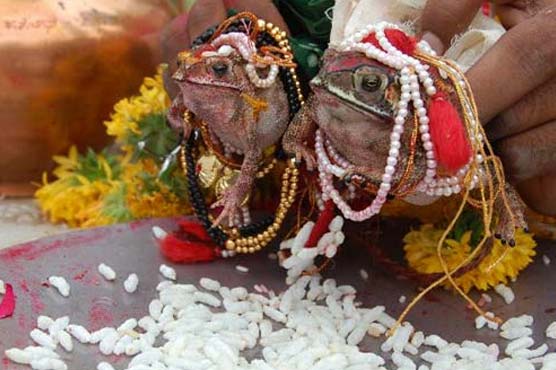
In a ritual aimed at appeasing Lord Indra, the Hindu rain god, residents in central and western India host wedding feasts for frogs amid pomp and ceremony on Saturday (June 30).Indeed, they were disappointed at the delay in the onset of the southwest monsoon and also over the less than favourable predictions of the weatherman.Consequently, most of the residents in central and western India looked for divine intervention to provide them with respite.At Chhatarpur in the central province of Madhya Pradesh, residents performed a traditional Hindu wedding, but the bride and groom were frogs, and not human being.The wedding was performed under the supervision of Bharatiya Janata Party (BJP) legislator Lalita Yadav.A group of women sat with the frogs during their wedding, singing songs and dancing while the amphibians were anointed and led through the ceremonies that aimed to appease Indra, the Hindu god of rain.To please Lord Indra, the divine entity of rain, we have married two frogs. Our elders say that this ritual invokes the infinite mercy of the Lord, and there is rainfall. We have prayed for plentiful rains this yea, so that there is prosperity in our region and our farmers remain happy. Bundelkhand is a thirsty region, and receives less rainfall than others, said Lalita Yadav.The priest who solemnised the unique wedding rituals, Pandit Munna Arjariya, said that the ceremonies had been performed in accordance with Hindu scriptures.According to Hindu rituals, the wedding started with an anointment of vermilion, followed by a sacred offering, then the solemnisation of the union and a Havan (fire ritual) was performed. The ceremony ended with the departure of the bride, said Pandit Arjariya.A similar ceremony was performed at Nagpur, the orange and cotton belt in the western state of Maharashtra, where people gathered for a colourful ceremony, raining marigold petals on the frogs that got married.The revellers said that rains were essential to the livelihood of farmers in the region.