
Updated on
Summary Underground bomb shelters in Shanghai have been replaced with nightclubs.
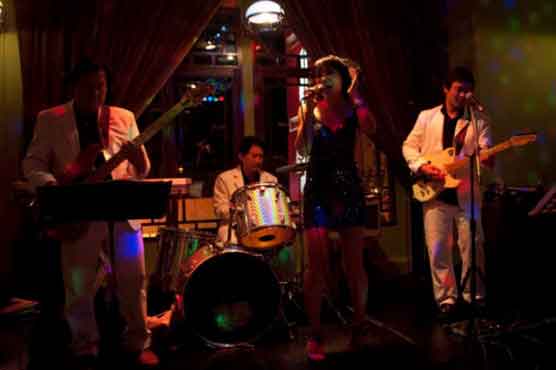
A myriad of disused bomb shelters which run deep under Chinas financial hub of Shanghai are now being creatively transformed into anything from nightclubs to wine cellars.It may look like any other building along a stretch of Shanghai street popular with bar-goers, but the simple entrance disguises one of the citys newest trends -- transforming disused bomb shelters into imaginative new spaces.Once through the door, revelers are lead through a labyrinth of tunnels down to the dance floor of The Shelter, an underground music haven popular with Chinese and foreigners alike.The club, six metres below ground with original cement walls and a distinct smell of mould, is one of a handful of former bomb shelters-turned-commercial venues across Chinas booming commercial and fashion capital.Despite its bare interiors and the occasional flooding during heavy rain, the 600-square-meter club has become one of the citys most popular, luring the likes of DJ Premier, who produces music for U.S. rapper Jay-Z.Founder and co-owner Gary Wang said he had not originally set out to start a club in a bomb shelter, but found the enclosed space and low ceiling suited the mix of Reggae, Drum n Bass and Soul spinning on the turntables.Before becoming a night club, the shelter underneath No. 5 Yongfu (pron: yong-foo) Road had been a vegetable market, an ice storage area, a massage parlour and even a public bath house.The windowless venue sometimes even throws pitch-dark parties, shutting down all the lights and even Wi-Fi connections, leaving only the music on.Hundreds of thousands of bomb shelters were built across China in the 1960s and 1970s to prepare for possible air raids from the Soviet Union amidst souring relations between the two communist giants.The shelters were let out by the government after tensions with the Soviet Union eased in the mid 1970s.It is unclear how many shelters were built in Shanghai but in Xuhui district alone, where The Shelter is located, there are about 2,000, according to the local government.Jin Dalu, a history professor at the Shanghai Academy of Social Sciences, said most of these bomb shelters have been torn down to make way for the citys sprawling subway network.Those that remain need to be properly fitted out in order to reuse them as a public space, he said.Local wine distributor, Ruby Red, has also turned one of the remaining shelters into a wine cellar.The company installed a tilted transmission belt to connect the underground store to its ground floor entrance for easy transportation of boxes of wine to their vans.Company staff said the cool, moist environment make the shelter a perfect storage space, giving another all-important commercial incentive to preserve a dark corner of the citys rich history.