Updated on
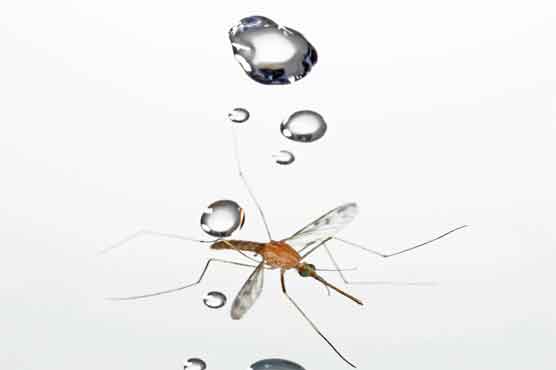
Summary Study focused on how mosquitoes survive raindrops that are more than 50 times their body mass.
Dr. David Hu, professor of mechanical engineering and biology at Georgia Institute of Technology, says mosquitoes could provide clues to building flying robots of the future.In a new study, Dr. Hu and his team of researchers studied how mosquitoes survive the impact of raindrops that are more than 50 times their body mass.This could directly impact the research for a robust flying vehicle, Hu told Yahoo News. Thats important. The dream is that these autonomous robots will be able to fly outdoors.The answer to how the tiny insects survive such a powerful impact could have applications in both science and medicine. Hus team used high-speed cameras to capture images of the mosquitoes and raindrops at 4,000 frames per second. The average camera records at 24 frames per second.At first, researchers tried to determine how mosquitoes managed to avoid the countless raindrops that fall in any given storm. Instead, they discovered that the mosquitoes dont avoid the rain at all. When a drop lands on a mosquito, the insect literally rides the wave of moisture, with his powerful exoskeleton making the impact no more powerful than the equivalent of a human brushing their own arm with a feather. The water then glides off the mosquitos body, allowing it to continue its flight unencumbered.Theyre not bothered by, or even trying to escape the rain, Hu said. They have very simple nervous systems. Its not even clear if they understand that its raining.In fact, the study found that the average mosquito is probably hit by a raindrop roughly every 25 seconds during a storm.Drops are coming down 10 times faster than mosquitoes can fly, Hu said. At some point, nature decided theres no way we can design something that avoids these things.