Summary Video posted by NASASpaceflight showed the New Glenn igniting on the pad before erupting into a massive fireball that billowed skyward, sending a towering plume of flames and smoke into the air
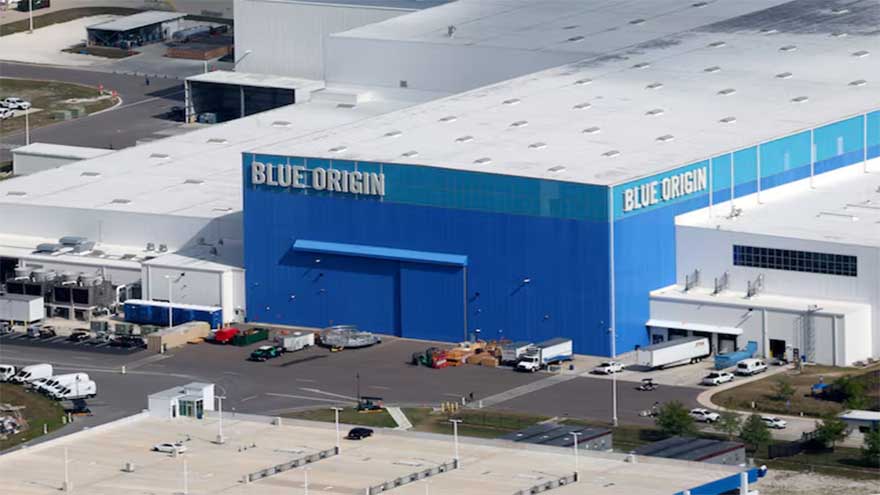
(Reuters) – An uncrewed Blue Origin New Glenn rocket exploded on the launchpad during a test on Thursday, in a major setback for Jeff Bezos’ space venture as it seeks to narrow the gap with Elon Musk’s IPO-bound SpaceX.
Video posted by NASASpaceflight, a YouTube channel that livestreams launches from Florida, showed the New Glenn igniting on the pad at about 2100 ET (0100 GMT on Friday) before erupting into a massive fireball that billowed skyward, sending a towering plume of flames and smoke into the air.
Blue Origin said it had experienced an “anomaly”, a term commonly used by rocket companies to describe a launch failure or explosion.
“We experienced an anomaly during today’s hotfire test. All personnel have been accounted for. We will provide updates as we learn more,” the company said in a post on X. A hot-fire test is where a rocket engine is fired up while anchored to the ground.
NASA Administrator Jared Isaacman said the agency was aware of the incident.
"Spaceflight is unforgiving, and developing new heavy-lift launch capability is extraordinarily difficult. We will work with our partners to support a thorough investigation of this anomaly, assess near-term mission impacts, and get back to launching rockets," he said on X.
Isaacman also added that NASA would provide information on any impacts to its Artemis and Moon Base programs.
Earlier this week, NASA awarded Blue Origin a $188 million contract to deliver rovers to the moon's surface using its uncrewed cargo lunar lander, Mark 1, as part of NASA's broader Artemis lunar exploration missions.
In a separate X post, Bezos said it was "too early to know the root cause" of the incident.
"Very rough day, but we’ll rebuild whatever needs rebuilding and get back to flying. It’s worth it," he said.
'ROCKETS ARE HARD'
Musk's SpaceX and Bezos' Blue Origin, in the latest competition between the billionaire-run companies, have been racing to help return people to the moon ahead of a planned crewed mission by China in 2030 by designing the lunar landers NASA will use.
SpaceX, which unveiled its plans for an IPO earlier this month and is set to become the first trillion-dollar US market debut, has also faced setbacks.
In June last year, its massive Starship spacecraft exploded in a similarly dramatic fireball during testing in Texas while preparing for a test flight.
SpaceX was partly successful in its 12th test flight of a Starship prototype last week after it deployed a clutch of mock satellites and executed a controlled splashdown of the spacecraft in the Indian Ocean. But the Musk-owned company failed to achieve a controlled landing of the Super Heavy booster, which tumbled into the Gulf of Mexico.
Musk responded on X to a video of the Blue Origin explosion, saying: “Most unfortunate. Rockets are hard."
Blue Origin had said on Wednesday it was preparing the New Glenn rocket to launch 48 Amazon Leo satellites into low-Earth orbit, part of efforts to build a broadband constellation to rival Musk’s Starlink network. It did not provide a launch date.
The company has spent billions of dollars and roughly a decade developing New Glenn, a rocket 29-stories high with a reusable first stage meant to compete with SpaceX's Falcon fleet and its more powerful Starship.
The US Federal Aviation Administration said it was aware of the incident, but added that it was outside its scope and did not impact air traffic in the region.