Updated on
Summary Some recent Russian satellite failures may have been the result of sabotage by foreign forces.
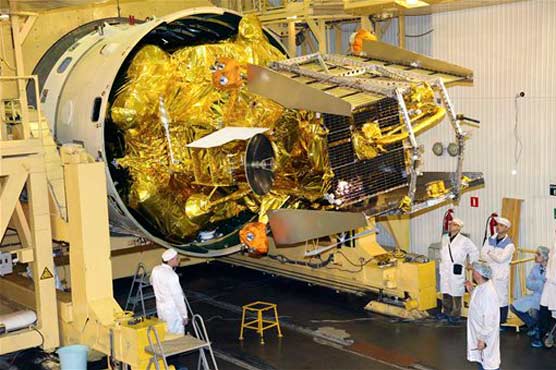
Roscosmos chief Vladimir Popovkin stopped short of accusing any specific country of disabling Russian satellites, but in an interview in the daily Izvestia he said some Russian craft had suffered unexplained malfunctions while flying over another side of the globe beyond the reach of his nations tracking facilities.Popovkin spoke when asked about the failure of the $170-million unmanned Phobos-Ground probe, which was to explore one of Mars two moons, Phobos, but became stranded while orbiting Earth after its Nov. 9 launch. Engineers in Russia and the European Space Agency have failed to propel the spacecraft toward Mars, and it is expected to fall back to Earth around Jan 15.Roscosmos spokesman Alexei Kuznetsov refused to elaborate on Popovkins comments, which marked the first time a senior Russian government official has claimed that foreign sabotage has been used to disable one of the countrys satellites.Popovkin said modern technology makes spacecraft vulnerable to foreign influences. I wouldnt like to accuse anyone, but today there exists powerful means to influence spacecraft, and their use cant be excluded, he said.James Oberg, a NASA veteran who has written books on the Russian space program and now works as a space consultant, said Popovkins comments were a sad example of the Russian cultural instinct to blame foreigners.Its a feature of space launch trajectories that orbital adjustments must be made halfway around the first orbit to circularize and stabilize subsequent orbits, Oberg said in e-mailed comments.