Updated on
Summary A day after a NASA spacecraft safely entered orbit around moon, its twin was poised to do the same.
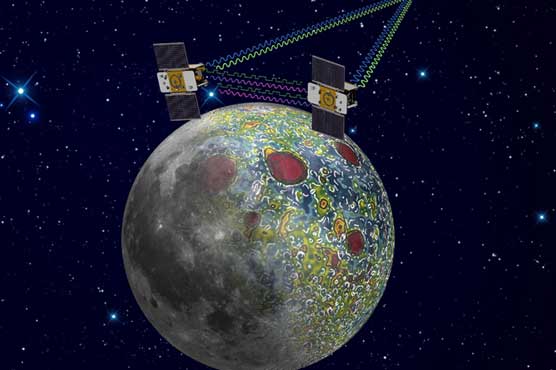
Twenty-four hours after a NASA probe safely entered orbit around the moon, its twin was poised to do the same on Sunday. The back-to-back arrivals would cap a roundabout journey spanning 3 1/2 months and covering 2.5 million miles (4 million kilometres).The Grail spacecraft short for Gravity Recovery and Interior Laboratory are on a hunt to learn whats inside the moon by meticulously mapping its lumpy gravity field from orbit.On New Years Eve, mission controllers at the NASA Jet Propulsion Laboratory in Pasadena, California, cheered after Grail-A flew over the south pole and braked into orbit. An engineer even blew a noisemaker to celebrate.The space agency hoped for a similar flawless performance from Grail-B.Chief scientist Maria Zuber of the Massachusetts Institute of Technology briefly relaxed after Saturdays success.Then I thought to myself, I have to go through this again. I cant believe it, said Zuber.This time, Zuber will fly to Denver to watch the second half with engineers at Lockheed Martin Space Systems, which built the washing machine-size probes.An expedition to the moon, Earths closest neighbor at about 250,000 miles (400,000 kilometers) away, usually takes a few days. Grail took the road less traveled by launching on a small rocket that lengthened the trip, but was more economical.Since the Space Age, the moon has been the focus of more than 100 missions. Despite all the exploration including Apollo landings on the surface and hauling rock and soil back to Earth aspects of the moon remain a mystery.One of the enduring puzzles is its lopsided shape with the far side more hilly than the side that Earth sees. Research published earlier this year suggested that our planet once had two moons that crashed early in the solar systems history and created the moon that graces the sky today.Scientists expect to learn more about how the celestial body formed using Grails gravity measurements that will indicate whats below the surface.Data collection wont begin until March after the spacecraft tweak their positions and are circling just 34 miles (55 kilometres) above the surface. While scientists focus on gravity, middle school students will get the chance to take their own moon pictures using cameras aboard the probes as part of a project spearheaded by Sally Ride, the first American woman in space.