Updated on
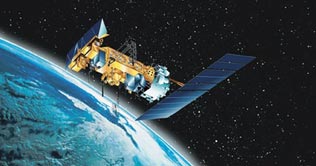
Summary A satellite rocketed into orbit on a mission to track salt in the upper levels of the oceans.
A Delta 2 rocket carrying the Argentine-built satellite blasted off from the Vandenberg Air Force on the Central California coast. The $400 million mission is collaboration between NASA and Argentinas space agency CONAE. Other countries participating in the project include Brazil, Canada, France and Italy.NASA will produce monthly maps detailing sea salt changes during the three-year mission. Scientists hope the data will help them better predict future climate change and short-term climate phenomena.The satellites orbit will be tweaked until it is approximately 400 miles above the Earth and engineers will check the instruments before science operations can begin.For decades, ocean salinity has been charted by ships and buoys which left gaps in the data since researchers dont have surveys for many parts of the ocean. Aquarius joins a European satellite that has been gathering data on both sea salt and soil moisture since 2009.