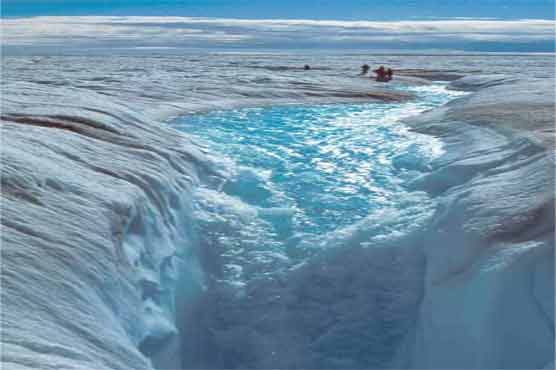
Summary Greenland is now losing about 22 gigatons (22 cubic kilometers) of ice a year.
SAN FRANCISCO: The disappearing Greenland Ice Sheet continues to thin along its edges, and could soon open up in the north, according to the latest results of satellite and aerial studies presented here today at the annual meeting of the American Geophysical Union.
The broad view is that the entire Greenland ice sheet is thinning, and has done so for 20 years, researchers reported at the meeting. But regionally, Greenland presents a more complicated story. Portions of the giant ice cap, one of the biggest blocks of ice on Earth, are melting faster than others, but a few places also seem to be getting thicker, scientists said.
Greenland is now losing about 22 gigatons (22 cubic kilometers) of ice a year, said Beata Csatho, a professor at the University of Buffalo in New York. All of that melting ice adds to rising global sea levels, and future melting is expected to further contribute to that rise.
The north of the ice sheet in particular presents a possible future hazard should rapid thinning there continue. The northeast edge is thinning rapidly, with potential for opening up the rest of the northern portion of the ice to melt, Csatho said. The ice sheet could start flowing like a river out to the north if the edges thin rapidly enough.
The southeast part of the ice sheet is also melting at increasing rates, Csatho reported. The data comes from satellites and NASA s IceBridge campaign, which flies planes laden with instruments over both the Arctic and Antarctic to fill a gap between the retirement of one ice-monitoring satellite and the launch of another.