Updated on
Summary Rowland was among three scientists awarded the 1995 Nobel Prize for chemistry.
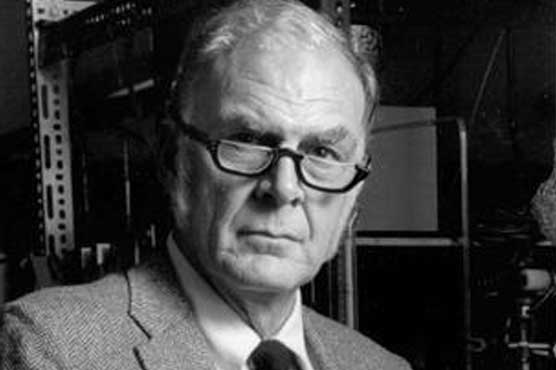
F.Sherwood Rowland, the Nobel prize-winning chemist who sounded the alarm on the thinning of the Earths ozone layer, has died. He was 84.Rowland died Saturday at his home of complications from Parkinsons disease, the dean of the University of California, Irvines physical sciences department said Sunday.We have lost our finest friend and mentor, Kenneth C. Janda said in a statement. He saved the world from a major catastrophe: never wavering in his commitment to science, truth and humanity and did so with integrity and grace.Rowland was among three scientists awarded the 1995 Nobel Prize for chemistry for explaining how the ozone layer is formed and decomposed through chemical processes in the atmosphere.The prize was awarded more than two decades after Rowland and post-doctoral student Mario Molina calculated that if human use of chlorofluorocarbons, a byproduct of aerosol sprays, deodorants and other household products, were to continue at an unchanged rate, the ozone layer would be depleted after several decades. Their work built upon findings by atmospheric scientist Paul Crutzen.Their prediction caught enormous attention and was strongly challenged partly because the non-toxic properties of CFCs were thought to be environmentally safe. Their work gained widespread recognition more than a decade later with the discovery of the ozone hole over the Earths polar regions.It was to turn out that they had even underestimated the risk, a Nobel committee said in its award citation for Rowland, Molina and Crutzen.Molina said his former mentor never shied from defending his work or advocating a ban on CFCs.He showed me that if we believe in the science ... we should speak out when we feel its important for society to change, Molina told The Associated Press.His work on ozone depletion made Rowland a prominent voice for scientists concerned about global warming.