Updated on
Summary A Russian team will attempt to scale world's second highest peak K2 in winter.
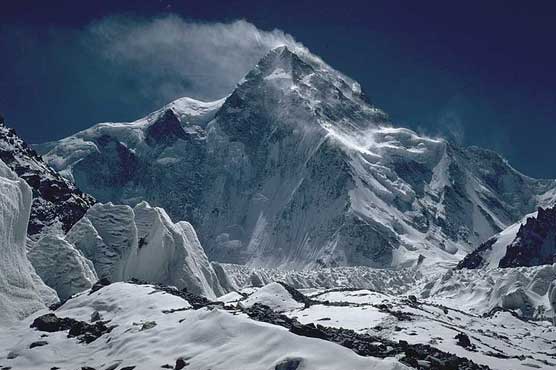
Reaching the summit of K2 in summer is one of mountaineerings most deadly and difficult challenges.Now, a team of Russians is attempting what no other has yet achieved scaling the worlds second highest peak in winter.The 15 climbers will endure temperatures plunging more than 50 below zero and winds of up to 70 kilometres an hour (40 miles per hour) as they inch up the stunning giant pyramid that straddles Pakistan and China. The assault is expected to take 2 1/2 months.This is only possible for a Russian team, said Victor Kozlov, the affable leader of the expedition, whose members put up a new route on K2 in 2007. God willing, we can make it, he said this week in the Pakistani capital, ahead of his journey to the Karakoram range in the far north of the country.Winter ascents of the worlds 14 highest mountains are some of most prized achievements left in climbing.The eight-thousanders, as theyre known since they all top 8,000 metres (5 miles), were all conquered in summertime long ago. Amid a crowded field where each year hundreds pay around $80,000 to be guided up Everest, winter ascents can help a climber stand out and get his or her name in the history books.Winter climbers have been summitting the 14 one by one the past decades starting with Everest but peaks of the Karakorum remained unconquered. The range is further north than the Himalayas, where Everest is located, and thus sees harsher winters. K2 is the northernmost peak of the lot.Teams attempted winter ascents in the Karakorum 16 times in recent years. The first success came this year, when a three-member team including American Cory Richards summitted Gasherbrum II. That left only four peaks, three of them in the Karakorum and one nearby in the Himalayas.If they make it up K2 in winter, it will be huge, said Billi Bierling, a mountaineering journalist with three eight thousanders to her name, including Everest.Elite mountaineers thrive on first ascents, new routes on established peaks and climbing in the purest style possible. That typically means no porter assistance high up on the slopes, no oxygen bottles or no reliance on fixed ropes left by other parties.